



QUICK BRIEF
What You Will Learn
- 01
Decide on a arrival the night before based on the importance of the first day and the lack of alternative transport
- 02
Recheck official operating information one week before, the previous day and the day of travel
- 03
When delayed, cut activity plans rather than compressing meals and sleep
CONTENTSTable of Contents
- 01Work backward from the first day's start time to decide whether a arrival the night before is needed
- 02Do not start training immediately after arrival
- 03For intercity buses, check reservation conditions and boarding points first
- 04Change what you check one week before, the day before and on the day
- 05Decide in advance what to cut when delays occur
- 06Decide on a an extra night after the final activity from the end conditions of the final day
- 07Long-distance camp travel checklist
- 08When using Niikappu as the camp base
SECTIONWork backward from the first day's start time to decide whether a arrival the night before is needed
| Condition | Situation where a arrival the night before is easier to justify | Situation where same-day travel may be easier to arrange |
|---|---|---|
| First-day activity | Morning start, tournament check-in or weigh-in | Only travel and rest after an evening arrival |
| Transport | Many connections or few alternative services | Several alternative options are available |
| Participants | Minors, large group or large equipment load | Small group that can change travel arrangements easily |
| Season | High snow, wind or peak-season impact | Relatively low weather and congestion impact |
A arrival the night before is not simply a way to arrive early; it separates the travel day from the competition or training day. The more important the first day, the more weight you should give to the effects of absence, late arrival and insufficient sleep relative to the extra accommodation cost.
SECTIONDo not start training immediately after arrival
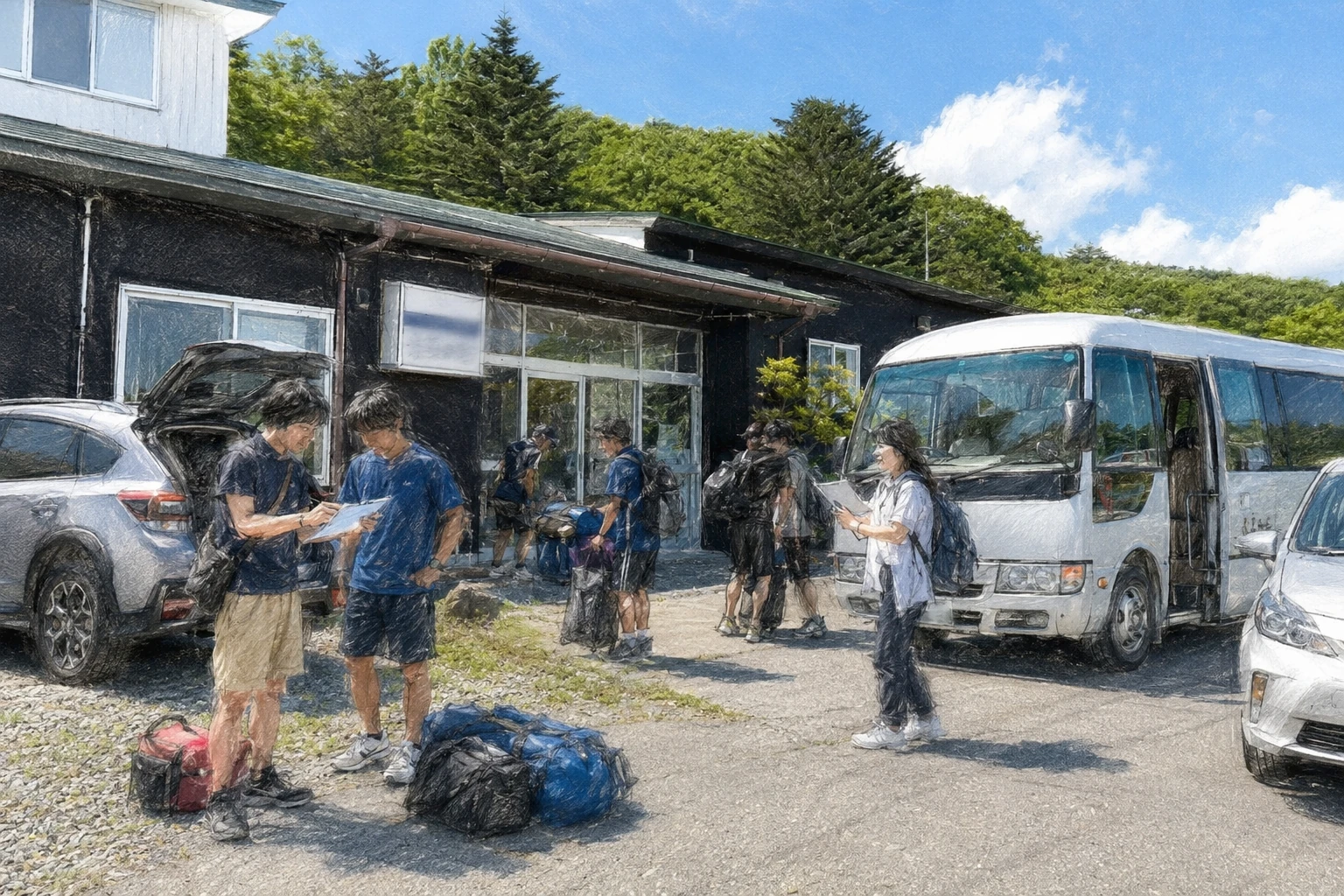
Travel from an airport or the Sapporo area to Niikappu can shift because of baggage collection, vehicle assembly, breaks, meals and road conditions. Leave time between facility arrival and training for headcount, baggage organization, changing clothes, replenishment and onward travel to the venue.
SECTIONFor intercity buses, check reservation conditions and boarding points first
Donan Bus currently describes the High-speed Pegasus service as reservation-only. If using it, confirm the current timetable, booking process, boarding location, baggage rules and capacity for your group with the operator. A reservation does not guarantee the connection if an inbound flight is delayed.
SECTIONChange what you check one week before, the day before and on the day
| Timing | Main checks | Decision |
|---|---|---|
| One week before | Services, reservations, roads, longer-range forecast and headcount | Pre-/an extra night after the final activity and alternative routes |
| Previous day | Cancellation outlook, warnings, road restrictions and meeting time | Departure change and shortening the first-day plan |
| Day of travel | Airport arrivals/departures, operations, road closures and local weather | Connection changes, waiting or activity cancellation |
SECTIONDecide in advance what to cut when delays occur
- 01
Have the representative consolidate current locations and expected arrival times
- 02
Give the facility, vehicle and venue the same updated arrival estimate
- 03
Cut or shorten the first-day orientation, training or meeting items that can be reduced
- 04
Do not forcefully compress meals, medication or sleep
- 05
Have the responsible person decide whether to change the next day's start time
SECTIONDecide on a an extra night after the final activity from the end conditions of the final day
Consider a an extra night after the final activity when the tournament finish time is uncertain, long-distance driving continues after teardown, or the connection to the last service is tight. Even without a planned an extra night after the final activity, identify alternative services and accommodation candidates for delays caused by awards, overtime, equipment removal or congestion.
SECTIONLong-distance camp travel checklist
The non-negotiable first-day time and activities that can be cut
Reservation conditions for flights, buses and vehicles
Representative contact for delays and the person responsible for contacting the facility
Deadline for deciding whether to add a arrival the night before or an extra night after the final activity
How meeting changes and cost conditions will be communicated to participants
SECTIONWhen using Niikappu as the camp base
Do not finalize accommodation and transport independently. Discuss feasible arrival time, vehicles, headcount and first-day activities with the facility as one plan. After sending a Booking Request, check the conditions provided by the facility and the notice of formal confirmation.
FROM READING TO PLANNING
Undecided details are useful planning information.
Even before dates or group size are final, we can help organize the next steps from your current conditions.REFERENCES
Reference Information
Last checked: 2026.08.12