


QUICK BRIEF
What You Will Learn
- 01
Place hard-to-move times first
- 02
Reserve daily-living time separately
- 03
Decide in advance what to cut when delays occur
CONTENTSTable of Contents
SECTIONStart with the times that are hardest to move
Begin with venue reservations, arrival and departure, public transport and meal times that are difficult to shift. Then place training, breaks, bathing and meetings between them so conflicts become visible early.
| Time to place first | What to confirm | Why it is hard to change |
|---|---|---|
| Venue use | Start, end, setup and cleanup | You cannot exceed the reservation slot |
| Arrival and departure | Meeting, vehicles and transfers | Affects the entire group |
| Meals | Serving, pickup or restaurant time | Large groups are difficult to change at the last minute |
| Lights-out and wake-up | Required sleep and morning preparation | Affects safety and concentration the next day |
SECTIONEstimate daily-living time independently from training
Writing “30 minutes from the end of practice to dinner” is unrealistic if that period also contains travel from the venue, equipment cleanup, changing and a headcount. Break each item into travel, preparation, execution and cleanup.
Travel from the venue to the accommodation
Organizing wet clothing and equipment
Changing and waiting time before and after bathing
Gathering for meals and checking headcount
Preparing for meetings and cleaning up afterward
Preparing baggage, drinks and equipment for the next morning
SECTIONAdd buffers for travel and transitions
Because everyone moves together at a camp, transitions take longer than on an individual trip. Do not connect every item without a gap. Add spare time for boarding and unloading, forgotten items, facility orientation and condition checks.
Common sources of delay
| Situation | Why it runs late | Advance measure |
|---|---|---|
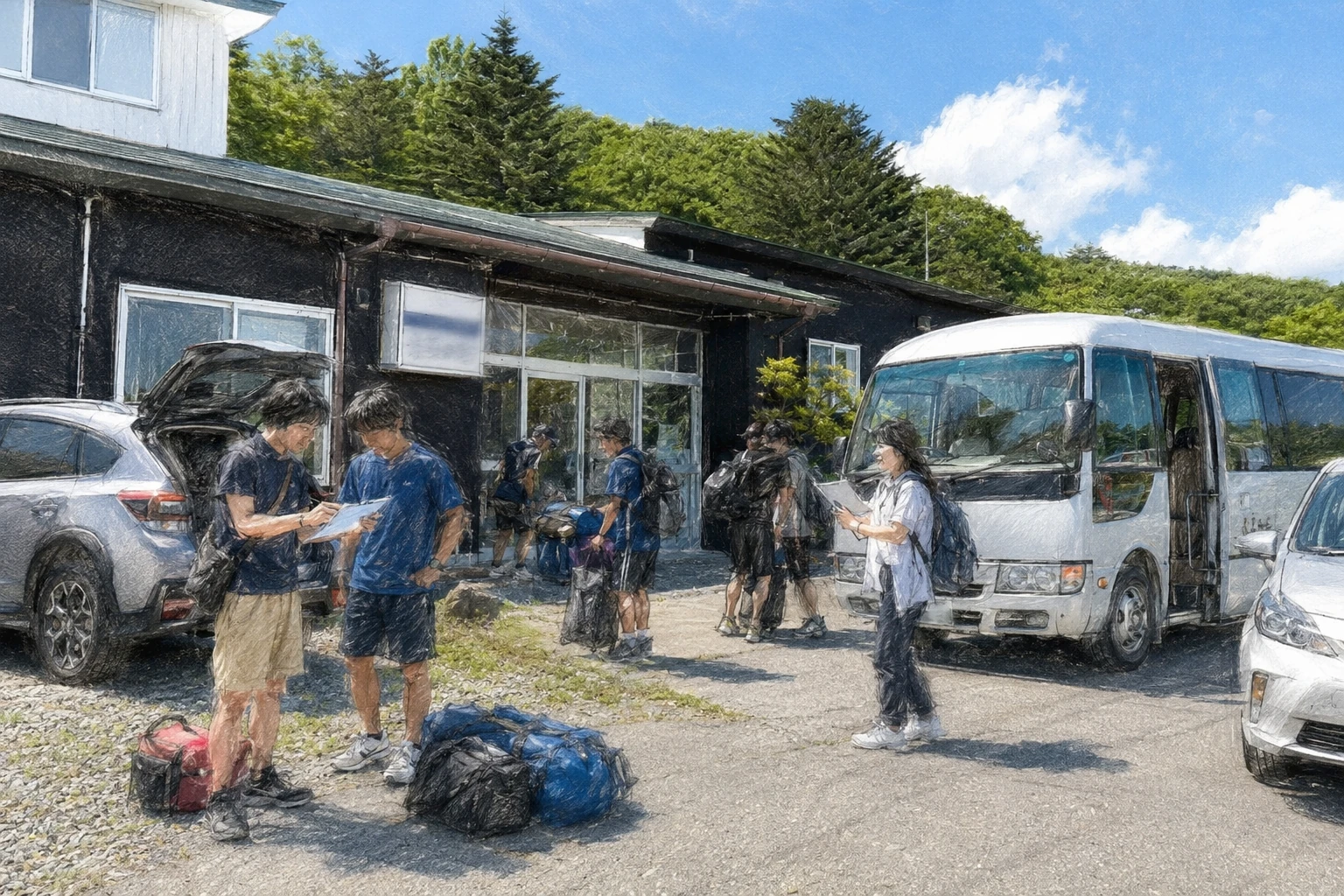
| Arrival on day one | Different vehicle arrival times and unloading | Assign first-arrival and reception roles |
| End of practice | Equipment cleanup, changing and headcount | Separate practice end from venue-departure time |
| Bathing | Usage order, washing area and hair dryers | Split into groups and set start times |
| Before departure | Baggage checks, forgotten items and loading | Assign checkers by room, equipment and vehicle |
SECTIONA general two-night, three-day structure
The table below is a general planning example, not a statement of BASE NIIKAPPU's facility hours. Adjust it after confirming the actual venue, meal, bathing and arrival conditions.
| Day | Time | Main plan | Planning point |
|---|---|---|---|
| Day 1 | Afternoon | Meet, travel, arrive and confirm the facility | Do not overload the arrival day with training |
| Day 1 | Evening | Light activity, meal, bathing and whole-group check | Share next-morning roles and meeting point |
| Day 2 | Morning to afternoon | Breakfast, practice, lunch and practice | Protect breaks on the highest-load day |
| Day 2 | Evening | Bathing, meal, reflection and next-day preparation | Set an end time for the meeting |
| Day 3 | Morning to midday | Wake, clean up, activity and checkout | Separate departure checks from travel time |
SECTIONDecide in advance what to cut if the schedule slips
If you wait until the day itself, the preferences of the loudest voices can dominate. Shorten optional items that are not directly tied to the camp objective first, then overly long meetings and free time. Protect meals, sleep and safety checks until the end.
- 01
Identify the cause of the delay and the time that can realistically be recovered
- 02
Contact the venue, meal provider or facility to check what can be changed
- 03
Shorten items with the smallest impact on the objective first
- 04
Share only the latest schedule with participants
- 05
Do not force the lost time into an unrealistically early start the next day
SECTIONWhat to confirm when using BASE NIIKAPPU
You can contact BASE NIIKAPPU after organizing candidate dates, headcount, planned activities and expected arrival/departure times. Training venues, meals, exclusive use, equipment and facility-use hours require confirmation based on the dates and operating conditions.
Arrival/departure and the formally confirmed usable hours
What can be provided and at what time if meals are requested
Bathing and wash-area hours and operating method
When shared spaces may be used for meetings
Vehicle arrival, boarding, unloading and baggage-delivery conditions
FROM READING TO PLANNING
Undecided details are useful planning information.
Even before dates or group size are final, we can help organize the next steps from your current conditions.REFERENCES
Reference Information
Last checked: 2026.08.12