


QUICK BRIEF
What You Will Learn
- 01
Prioritize the danger at your current location and evacuation information.
- 02
Use town, weather, road and outage information according to their roles.
- 03
Prepare more than one way to get information if one communication method stops working.
CONTENTSTable of Contents
- 01First Confirm Your Location and the Type of Hazard
- 02Use Different Information Sources for Different Purposes
- 03Do Not Wait for a Warning Before Looking for Evacuation Sites
- 04Decide Whether You Can Stay Somewhere Safe, Not Whether You Can Keep Traveling
- 05Spread Out Your Information Sources in Case of Power or Communication Failure
- 06For Groups, Separate Headcounts from External Communication
- 07Pre-Trip Checklist
- 08Communication While Staying at BASE NIIKAPPU
SECTIONFirst Confirm Your Location and the Type of Hazard
Heavy rain, flooding, blizzards, earthquakes and tsunamis require different decisions about where to avoid and whether to move. Do not rely only on GPS; confirm the facility name, address, road name, and your position relative to the sea and rivers. Call 119 for a life-threatening emergency, and 110 when police are needed for an incident or accident.
SECTIONUse Different Information Sources for Different Purposes
| Source | Main information to check |
|---|---|
| Japan Meteorological Agency (JMA) | Warnings and advisories, earthquakes and tsunamis, and expected rain or snow |
| Niikappu Town disaster-prevention pages | Evacuation sites, hazard information and local guidance |
| Niikappu disaster-prevention email and LINE | Shelter openings, road closures, lifeline and other local information |
| Road information / JARTIC | Closures, restrictions and traffic disruptions |
| Electric utility and other providers | Areas with outages, expected restoration and precautions |
Niikappu Town explains that its disaster-prevention email and LINE services distribute weather information such as heavy rain, flooding, heavy snow and blizzards, along with shelter openings, road closures and lifeline information. Register before your trip and make sure notifications can reach you so local information is easier to check.
SECTIONDo Not Wait for a Warning Before Looking for Evacuation Sites
Before travel, check the town hazard map and evacuation sites for your accommodation, activity locations and travel routes. However, the 'nearest' place is not always the safest. Follow guidance based on the type of disaster, road conditions, and evacuation instructions from the town or facility.
SECTIONDecide Whether You Can Stay Somewhere Safe, Not Whether You Can Keep Traveling
Do not prioritize reaching the destination when roads are restricted or visibility is poor.
Move away from places that are dangerous for the specific hazard, such as coasts, rivers and cliffs.
Use official information to decide whether it is safer to remain inside a facility or evacuate.
Check whether everyone moving by car at once could increase congestion or danger.
SECTIONSpread Out Your Information Sources in Case of Power or Communication Failure
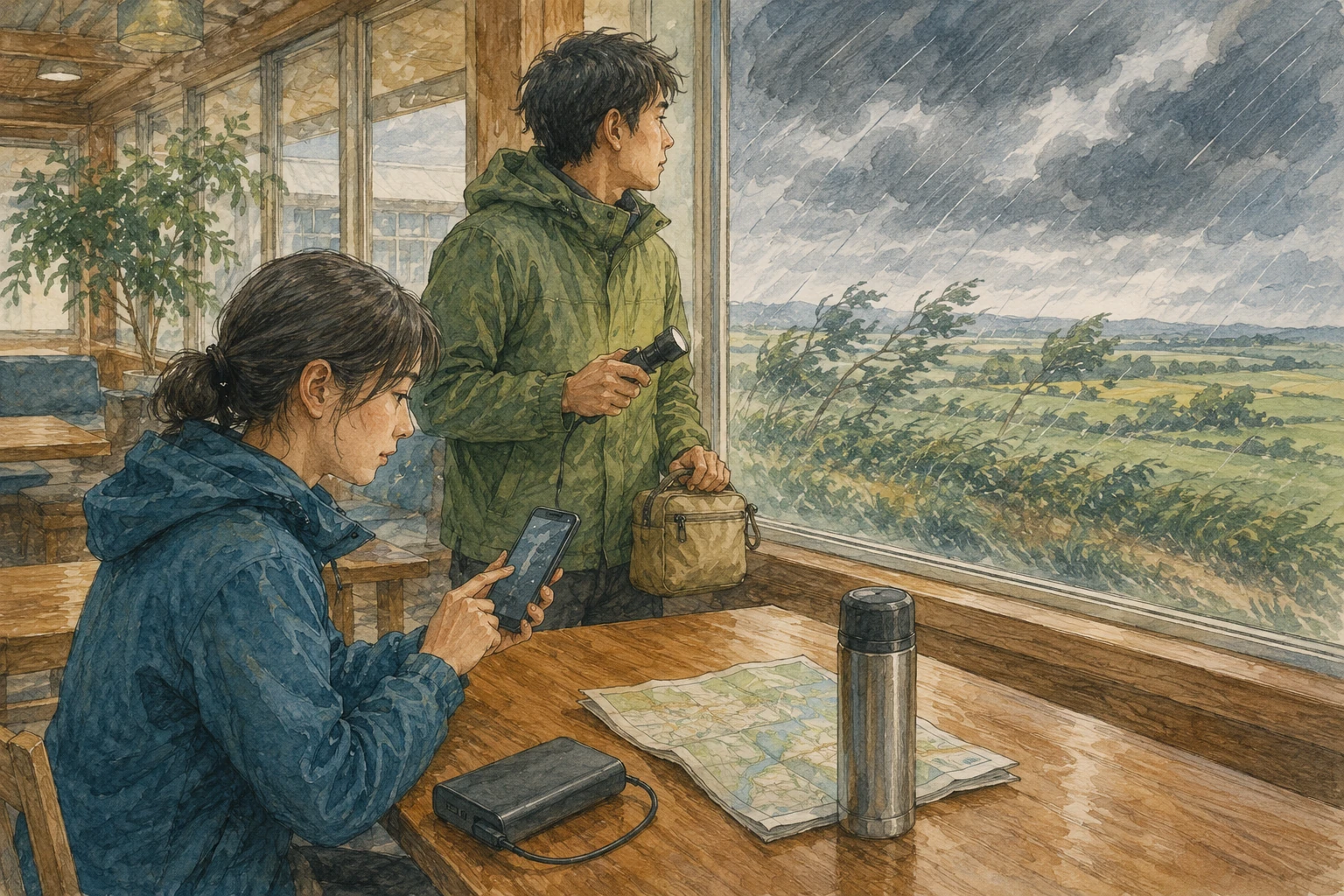
Charge smartphones and portable batteries.
Use radio and facility announcements in addition to disaster-prevention email and LINE.
Keep the minimum essential information offline, including accommodation address, emergency contacts and a participant list.
Designate one person for calls instead of having several people call at the same time.
SECTIONFor Groups, Separate Headcounts from External Communication
- 01
Gather participants in a safe place and count everyone.
- 02
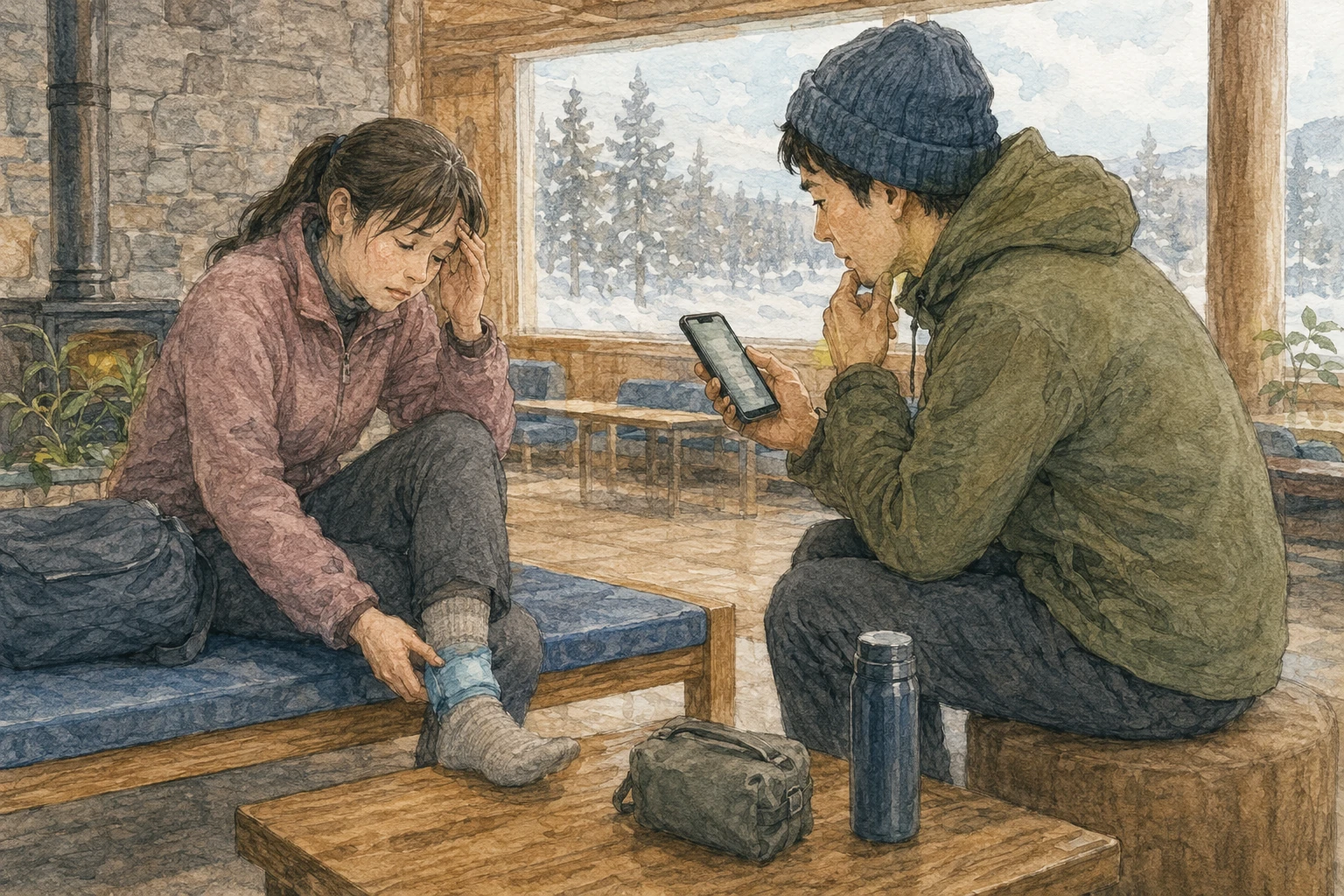
Identify anyone who is injured, needs medication or requires mobility assistance.
- 03
Check instructions from the facility and the town.
- 04
Have a representative update guardians, the organization or other outside contacts.
- 05
Decide on onward travel or returning home only after road and transport safety is confirmed.
SECTIONPre-Trip Checklist
Register for Niikappu disaster-prevention email and LINE.
Save the addresses and evacuation information for your accommodation and activity locations.
Save official JMA, road and transport pages.
Prepare emergency drinks, warm clothing, a light and charging equipment.
Keep emergency contacts for companions and designate a communication lead.
Bring medication, a medication record and information about health-related needs.
SECTIONCommunication While Staying at BASE NIIKAPPU
Inside the property, check evacuation guidance and posted notices provided by the facility in advance or on the day, and prioritize official instructions from Niikappu Town, the fire department, police and other authorities. Do not assume staff are present at all times. If you are away from the property, do not force your way back; secure safety where you are and have the group representative report the situation. The inquiry form is not an emergency reporting channel.
FROM READING TO PLANNING
Undecided details are useful planning information.
Even before dates or group size are final, we can help organize the next steps from your current conditions.REFERENCES
Reference Information
- Niikappu Town: Disaster Prevention, Crime Prevention and Safety↗
- Niikappu Town: Disaster-Prevention Email and LINE↗
- Niikappu Town: Regional Disaster Prevention Plan↗
- Niikappu Town: Local Weather Observation Information↗
- Japan Meteorological Agency: Weather Warnings and Advisories↗
- Hokkaido Regional Road Information↗
- Japan Road Traffic Information Center↗
- Fire and Disaster Management Agency: 119 Emergency Call↗
- Hokkaido Electric Power Network: Outage Information↗
Last checked: 2026.08.11