


QUICK BRIEF
What You Will Learn
- 01
Choose only memorial locations that are officially or publicly confirmed as visitable.
- 02
Treat statues, museums, horse memorial monuments and horse-country scenery as different experiences.
- 03
Do not enter private farms or non-public areas; recheck opening and transport conditions.
CONTENTSTable of Contents
- 01Choose famous-horse spots only from official or public places open to visitors.
- 02Visit horse memorial monuments at Yushun Memorial Park.
- 03See Oguri Cap materials at Yushun Memorial Hall.
- 04Haiseiko memorial statue in front of Re・Cord Museum.
- 05Enjoy Thoroughbred Ginza separately from memorial sites.
- 06Do not enter private farms, stallion facilities or gravesites without permission.
- 07Choose stops based on what interests you as a racing fan.
- 08Build a half-day or 2-day/1-night route.
- 09Recheck opening periods, visitor access and transport.
SECTIONChoose famous-horse spots only from official or public places open to visitors.
This article covers locations confirmed as visitable through public or official tourism information. Representative examples include the Haiseiko memorial statue in front of Re・Cord Museum, the Oguri Cap horse statue at Yushun Memorial Park, horse memorial monuments and memorial sites officially described as visitable, and the seasonally operated Yushun Memorial Hall.
Even when a horse name and location appear online, do not add a place to the route unless current visitor access can be confirmed. Avoid presenting closed facilities, private gravesites, monuments inside farms or places with unclear management as “hidden gems.” That protects both visitors and the local community.
When saving candidate stops to a map, register the official facility name and address rather than only the horse name. The same horse may have statues, displays or memorials in multiple regions, so do not assume a search-result photo was taken in Niikappu.
When building the candidate list, record the official information URL, date checked and contact details for each place. If access rules change, you can quickly identify which stop to remove and avoid relying on old notes.
Choose candidates in this order: official town or tourism facilities, places whose managers clearly state that visitors are allowed, and places where on-site signs confirm the public area. Do not add locations known only from personal posts until you can verify a public basis for visiting.
SECTIONVisit horse memorial monuments at Yushun Memorial Park.
At Yushun Memorial Park, visitors can see the Oguri Cap horse statue and horse memorial monuments or memorial sites listed as visitable by the official guide. Examples currently confirmed in official information include Pacificus, Milford, Narita Brian, Mayano Top Gun, Kane Hekili, Yaeno Muteki and Rosita.
The list may change, so do not treat it as a permanently complete catalog. When paying respects, avoid leaving offerings, visit quietly and do not interfere with paths or maintenance work. The park is described as visitable year-round, but follow any on-site restrictions and weather-related controls.
At a horse memorial, think not only about racing results and pedigree but also about the people who bred, cared for and preserved records of the horse. Do not turn the area into a long photo session; leave space for other visitors to pay respects quietly.
Outdoor memorial locations can become difficult to approach because of snow, fallen leaves or maintenance. Even if you can see a statue or monument, do not enter uncleared areas; check your footing and all no-entry signs.
SECTIONSee Oguri Cap materials at Yushun Memorial Hall.
Yushun Memorial Hall displays materials related to Oguri Cap, photographs of notable horses and former stallions, and explanatory panels. For 2026, it is currently listed as open March 28 to November 8, 10:00–16:00, closed Thursdays, with free admission.
Opening periods and exhibits can change by year. Check A37, “Yushun Memorial Park & Memorial Hall Guide,” for detailed current visiting conditions. Do not confuse the memorial hall address with the park address, and return to the facility information for parking conditions.
Seeing the indoor exhibits and the outdoor statue and memorial monuments on the same day lets you trace a horse’s racing life and later legacy through different types of material. You can learn the background indoors first and then go outside, or notice names outdoors and look for their stories inside.
SECTIONHaiseiko memorial statue in front of Re・Cord Museum.
The Haiseiko memorial statue is introduced as a publicly visitable memorial spot in front of Re・Cord Museum. It is on the town-center side and can be combined easily with Re・Cord Museum, Yushun Tower and the roadside station on the same day.
Do not assign independent opening hours to the outdoor statue. Follow the operating, parking, event and construction conditions of the surrounding facilities. Even for a short visit to the statue, do not block the road or facility circulation and use designated parking.
When visiting the Haiseiko memorial statue, view it from a position that does not interfere with events or pedestrian flow in front of Re・Cord Museum. Even for a brief stop, do not leave a vehicle along the road; follow the facility’s parking guidance.
The town-center statue is easy to visit while waiting for a facility to open or between stops, but crowds may gather during events. Keep photos brief and do not block the museum entrance or wheelchair routes.
SECTIONEnjoy Thoroughbred Ginza separately from memorial sites.
Thoroughbred Ginza is not a place to search for a particular memorial statue or museum. It is an area where visitors can understand the landscape and horse-breeding industry from public roads and public locations. Do not look for horses or monuments inside farms as if they were memorial attractions.
Check the existing “Thoroughbred Ginza Highlights & Ranch-Visit Manners” guide for parking, photography, approaching horses and farm-visit etiquette. Do not cram memorial touring and farm scenery into one map without distinguishing the public areas.
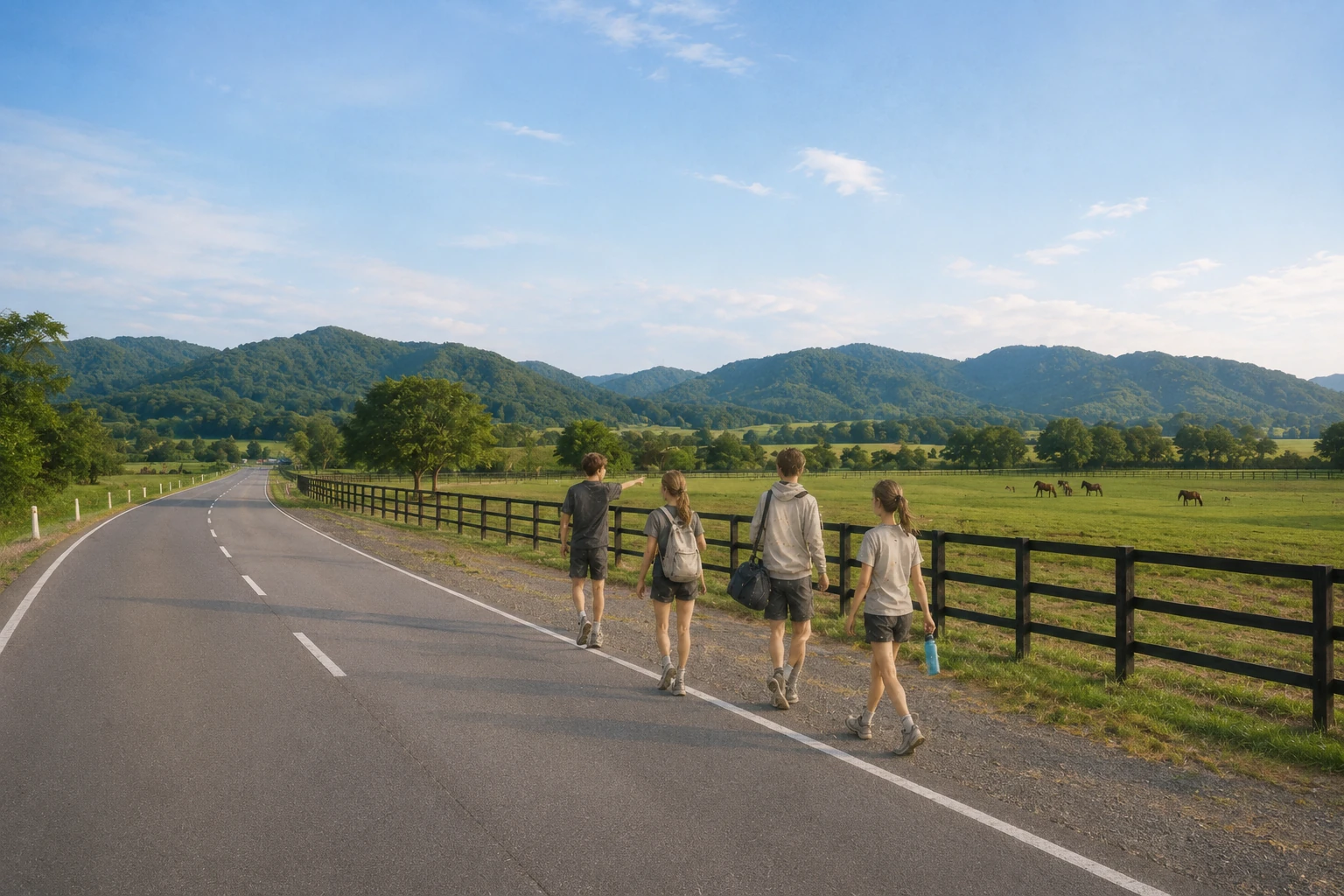
Even when no horses are visible, the relationship between pastures, fences, rolling hills and roads conveys the scale of the horse-breeding area. Do not turn the objective into “photograph a famous horse at any cost”; respect everyday life and business operations in the region.
SECTIONDo not enter private farms, stallion facilities or gravesites without permission.
Yushun Stallion Station and other private farms are not sightseeing facilities with free entry. If an official guided-tour program is separately announced and you want to visit, use only that procedure and follow its current rules. Otherwise, do not cross fences, enter private roads, approach horses, call to staff or horses, or park on the roadside for long periods.
Unauthorized entry creates danger for visitors and can startle horses, interfere with biosecurity or obstruct work vehicles. Do not make exceptions because it is “only for a moment” or “only for a photo.” Exclude non-public places completely from the itinerary.
SECTIONChoose stops based on what interests you as a racing fan.
| Interest | Main stop | Supporting stop |
|---|---|---|
| Oguri Cap | Yushun Memorial Hall / Oguri Cap horse statue | Yushun Memorial Park |
| Showa-era racing culture | Haiseiko memorial statue | Re・Cord Museum / local culture articles |
| Notable horses and stallions | Photographs and exhibits at Yushun Memorial Hall | Horse memorial monuments officially open to visitors |
| Horse-country scenery | Public locations along Thoroughbred Ginza | Articles explaining Niikappu’s horse industry |
Rather than searching only for one favorite horse, decide first whether you want to encounter its memory through a statue, documents, a memorial monument or the landscape. That makes it easier to build a satisfying trip without drifting onto private property.
Choose one theme such as the racing era, a favorite bloodline or achievements after retirement. This helps narrow the stops. If your companion is not a racing fan, share one horse’s story through a statue or photograph instead of spending too long explaining specialist terminology.
For companions who do not know the horse names, first look at a statue or photo and then share a short background. Avoid giving long racing lectures on site.
SECTIONBuild a half-day or 2-day/1-night route.
For a half day, a practical option is the Haiseiko memorial statue plus Re・Cord Museum in the town center, or Yushun Memorial Park plus Yushun Memorial Hall in the Asahi area. Rushing back and forth between both areas can leave too little time for exhibits and parking checks.
With one overnight stay, you can divide the trip: town-center music culture and the memorial statue on day one, then Yushun Memorial Hall, the park and public Thoroughbred Ginza viewpoints on day two. Staying overnight reduces pressure from seasonal closing times and sunset.
For the half-day plan, center the route either on the town-center side or the Asahi area to shorten travel. Even on a 2-day/1-night trip, fix the opening times and closed days of public facilities first, and keep landscape-viewing time flexible for the weather.
Even if you connect the trip with a race date or a famous horse’s anniversary, there may be no special event at local facilities. Use normal opening conditions as the baseline and add an event only after confirming it.
SECTIONRecheck opening periods, visitor access and transport.
Whether each place is still officially open to visitors
The current-year opening season and closed days of Yushun Memorial Hall
Visitor access and offering rules at horse memorial monuments
Boundaries with private property and stallion facilities
Parking, road and large-vehicle conditions
On-site photography notices
Photography rules are not published uniformly for every location. Do not give a blanket guarantee that photography is allowed; prioritize on-site signs, other users and private-property boundaries. The specific information in this article was checked on August 5, 2026; return to primary sources immediately before visiting.
Social-media and personal-blog visit reports do not guarantee the current public area. If an official page is old or unclear, ask the manager. If you cannot obtain confirmation, postpone listing or visiting the location.
Even a public location may become temporarily inaccessible because of construction, snow, events or maintenance. Do not move barriers or search for an unofficial alternative route; skip that stop and continue the trip.
When publishing your trip record, avoid photos or location data that make it look as though visitors can enter private property. State that photos were taken from official parking or public areas to reduce misunderstandings for later visitors.
If visitor access is unclear or you cannot approach a place on site, remove it from the route. Do not move closer to private property in search of an alternative route; complete the trip only within officially confirmed public areas.
FROM READING TO PLANNING
Undecided details are useful planning information.
Even before dates or group size are final, we can help organize the next steps from your current conditions.REFERENCES
Reference Information
- Yushun Memorial Park↗
- Haiseiko Memorial Statue↗
- Oguri Cap Statue↗
- Yushun Memorial Hall opening notice↗
- Yushun Memorial Hall↗
Last checked: 2026.08.11