


QUICK BRIEF
What You Will Learn
- 01
Do not treat the Niikappu Route as a casual or beginner route; check roads, forest roads and walking sections with the correct managing authority.
- 02
New Poroshiri Hut is an unattended emergency hut, so plan to be fully self-sufficient without meals, bedding or a resident manager.
- 03
Respect the 2026 policy that one-night/two-day notices are not accepted, and treat notices, COCOHELI, the climbing plan and schedule margin as mandatory planning conditions.
CONTENTSTable of Contents
- 01Who the Mt. Poroshiri Niikappu Route is for | Not a beginner route
- 02First check the current year's opening period, roads and forest-road information
- 03Management boundaries and contacts for the town road, Niikappu Forest Road and gates
- 04Travel to Idonnappu Hut and the walking section beyond it
- 05New Poroshiri Hut: operating period, notices, capacity and cooperation contribution
- 06Design the itinerary with generous time and extra days
- 07Prepare for deteriorated trails, high water, rockfall and brown bears
- 08Prepare water, food, bedding, portable toilets, communications and COCOHELI
- 09Follow the Poroshiri Code and environmental-protection rules
- 10Plan pre- and post-climb stays and a final pre-departure check
SECTIONWho the Mt. Poroshiri Niikappu Route is for | Not a beginner route
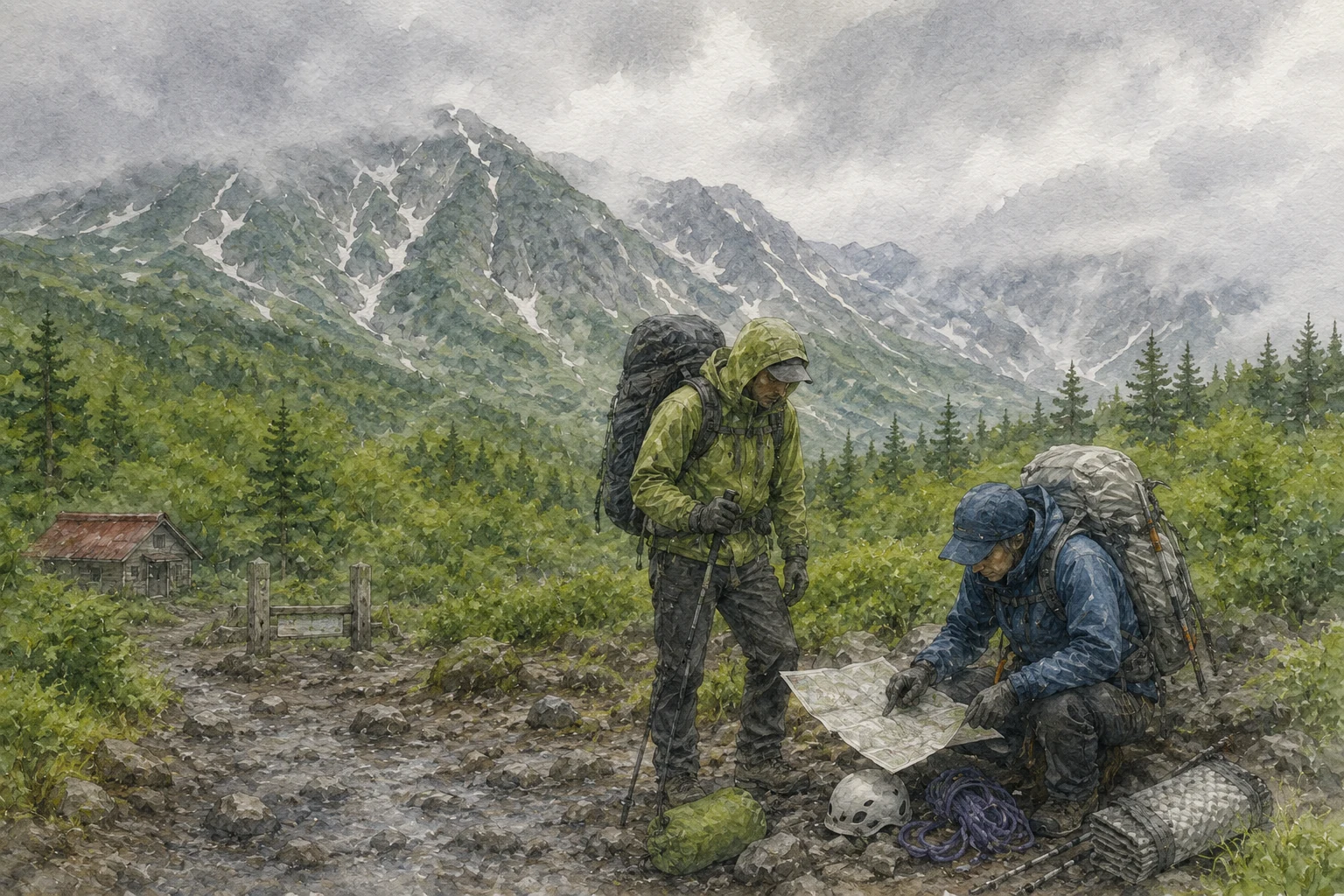
The Niikappu Route is not a route where you can easily drive to the trailhead and make a short round trip to the summit. You must manage a long town road and forest road, multiple gates, a walking-only management road, an unattended hut and the mountain trail beyond them as one continuous plan. Do not describe it as beginner-friendly, casual or easy to call for rescue from.
The mountaineering club warns about narrow and deteriorated roads, longer hiking time due to detours, fall accidents, brown-bear encounters and poor communications. Do not simply adopt old course times or personal trip records; judge whether the route is suitable based on your own experience, load, weather and margin for retreat.
SECTIONFirst check the current year's opening period, roads and forest-road information
The 2026 general opening period for the Niikappu Forest Road was announced as June 27 through September 30, but the road was temporarily closed after a landslide caused by heavy rain and general access resumed on July 25. This is information current as of July 24, 2026, not a permanent guarantee that the road will remain passable.
SECTIONManagement boundaries and contacts for the town road, Niikappu Forest Road and gates
The Iwashimizu-Abukashanpe Town Road section is handled by Niikappu Town, while the deeper Niikappu Forest Road is handled by the Hidaka Southern District Forest Office. Do not ask about them as if they were one road; separately confirm same-day access, construction, gates and operating hours for both.
| Section / information | Main contact | What to confirm |
|---|---|---|
| Iwashimizu-Abukashanpe Town Road | Niikappu Town | Closures, construction and same-day access |
| Niikappu Forest Road / national-forest side | Hidaka Southern District Forest Office | General opening, gates and damage status |
| Overall climbing plan | New Poroshiri Mountaineering Club | Huts, notices, route changes and brown bears |
SECTIONTravel to Idonnappu Hut and the walking section beyond it
The forest office says the national-forest gate is about 3 km beyond the town-road gate and Idonnappu Hut is about 37 km beyond that. Check multiple gates, road managers and the actual vehicle endpoint against maps and the latest notices.
Vehicles may not travel from Idonnappu Hut to New Poroshiri Hut. In the Poroshiri Code, another management-road section is described as 18.5 km from its gate to the hut and walking only, with motorcycles, bicycles and other vehicles prohibited. Do not weaken the prohibition or mix up the road sections.
Even the sections open to vehicles are not ordinary paved roads. Consider a vehicle suitable for forest roads, fuel, tires, self-recovery from breakdowns, passing/retreat space, oncoming vehicles and gate closures, and check whether your rental or vehicle contract permits this type of driving.
SECTIONNew Poroshiri Hut: operating period, notices, capacity and cooperation contribution
The 2026 operating period for New Poroshiri Hut is June 29 through September 29. It is an unattended emergency hut with no meals, bedding or resident manager. Do not expect hotel-style services; carry in everything you need and carry it back out.
The mountaineering club also manages Idonnappu Hut, but do not confuse the location, role or procedures of the two huts. Check the hut calendar, usable dates and congestion adjustments, and do not assume that arriving guarantees you a place.
Bedding and cold-weather equipment
Food for the entire trip and sufficient water
Cooking gear, lighting and backup power
Portable toilet kits and carry-out bags
First-aid, repair and spare equipment
An action plan that assumes communications may fail
For 2026, groups of five or more submit a hut-use application, while solo hikers and groups of four or fewer submit a hut-use notice. Every climber must carry COCOHELI and list the ID, and a climbing plan must be submitted to Hokkaido Police. Check the current forms and submission deadlines, not only the group-size category.
The mountaineering club may ask parties to change dates when crowded. The Poroshiri Code's guidance of 11 people or fewer is a party-size safety guideline, not a legal capacity or the number that can be booked. Separately, the current 2026 hut-manager information limits daily hut use to 30–35 people. Neither number guarantees acceptance or space; confirm the outcome of the application or notice and the club's adjustment.
The current hut-manager page requests a cooperation contribution of JPY 1,000 per person per night for hut and toilet maintenance. Confirm the latest payment instructions when applying. Submitting a notice does not guarantee that the road, weather or your physical condition will be safe.
SECTIONDesign the itinerary with generous time and extra days
The mountaineering club says that, because of risks such as brown-bear activity during early morning and twilight, it does not accept the one-night/two-day use notices that had increased in recent years during 2026. Do not create or recommend a one-night/two-day model itinerary.
Include forest-road driving, the walking-only management road, hut use, the summit round trip, retreat and the possibility of road closure, and keep reserve days. If there is no schedule margin, postpone the plan rather than trying to walk faster.
SECTIONPrepare for deteriorated trails, high water, rockfall and brown bears
Following heavy-rain damage, detours and route changes have led the mountaineering club to state that the trip takes about one hour longer. Narrow and deteriorated sections, fall accidents and increased brown-bear encounters are also noted, so simply adding a small buffer to old standard times is not enough.
Set turnaround criteria before departure based on time, weather, physical condition, equipment and the possibility of renewed road closure. Do not continue toward the summit if you are behind schedule, rainfall increases, visibility falls, fresh bear signs appear, or a crossing or slope is more dangerous than expected.
Trail running is stated to be completely prohibited. Do not plan to run to save time, and follow the Poroshiri Code requirement to stay on the management road and mountain trail.
SECTIONPrepare water, food, bedding, portable toilets, communications and COCOHELI
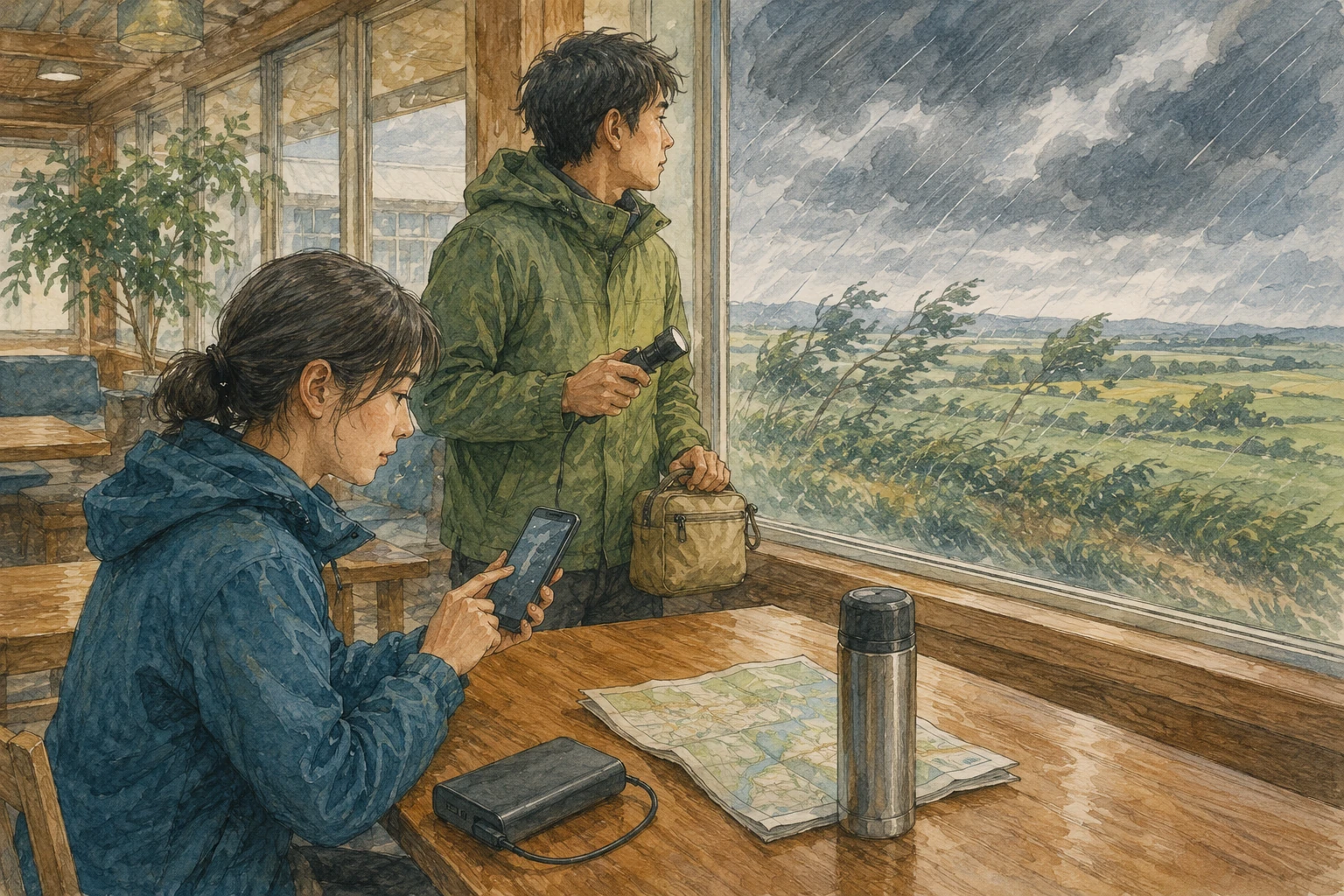
Mobile phones are reported to work in very few places and rescue requests can be difficult. There is no resident manager, food or bedding at the hut, and no toilet above the hut. A plan that expects communications or facility services to make up for missing supplies is not viable.
Carry sufficient water and food, bedding, insulation, rain gear, first-aid and repair supplies, spare equipment and portable toilet kits, and pack out used toilet kits and all rubbish. COCOHELI and a submitted climbing plan do not replace basic equipment or judgment.
The mountaineering club recommends leaving three days of food, water and changes of clothing in the vehicle in case the forest road closes. Present this as a practical recommendation current for 2026, not as a guarantee that reaching the vehicle will always make you safe.
SECTIONFollow the Poroshiri Code and environmental-protection rules
The Poroshiri Code requires hikers to stay on the trail, not collect plants or animals, carry out rubbish, never feed wildlife, use portable toilets, make no fires, do no trail running, and travel management roads on foot only.
Stay on the mountain trail and management road.
Do not collect plants, animals, stones or other natural objects.
Do not feed wildlife.
Carry out rubbish and used portable toilet kits.
Do not make fires.
Do not trail run.
Do not enter walking-only sections with motorcycles, bicycles or other vehicles.
Do not move closer to brown bears for photographs, leave food unattended or enter brush alone. Do not weaken nature-protection rules into optional 'manners'; treat them as conditions for continuing to use the route.
SECTIONPlan pre- and post-climb stays and a final pre-departure check
Use a pre- or post-climb stay not to force an excessively early start, but to split the fatigue of long-distance driving, recheck road and hut information, and leave recovery margin after a retreat. Do not assume travel time or transport from the accommodation to the gate; confirm realistic options such as your own vehicle or taxi.
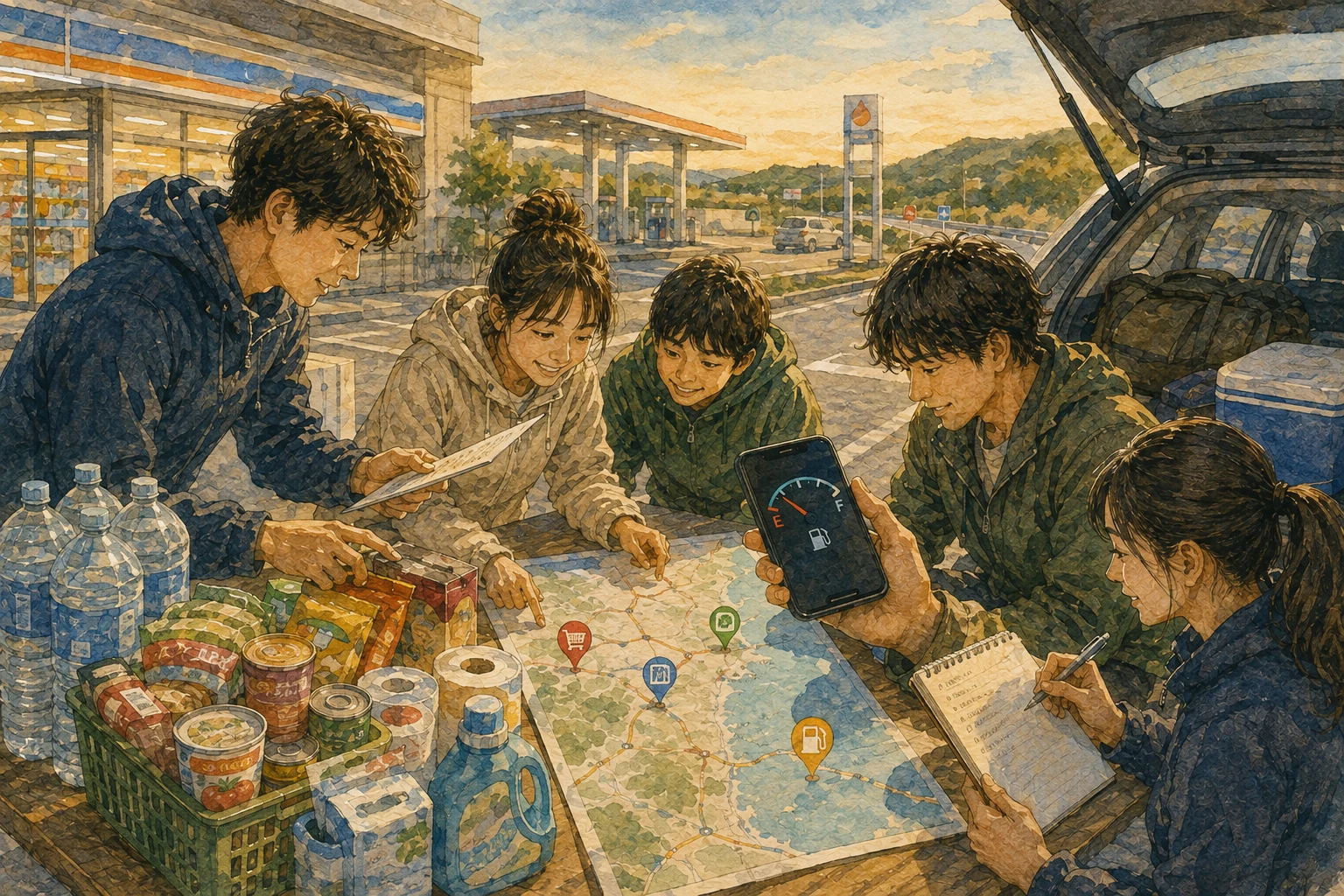
Do not assume that fuel, food, water, batteries or portable toilet kits can be bought in Niikappu immediately before the climb. Prepare critical equipment at your departure point such as Sapporo and check opening hours and stock. Do not assume post-climb bathing or meals will be open either; keep alternatives.
When asking BASE NIIKAPPU about a pre- or post-climb stay, do not assume unpublished services such as trailhead transport, early breakfast, equipment storage or a drying room. Ask individually about required times, party size, vehicles, luggage and meal conditions.
Roads, forest roads, hut calendars, application status, weather and brown-bear information can change by the day. Since 2026 itself included a reopening after closure, do not freeze information from one check until departure day.
- 01
Niikappu Town: town-road closures and construction
- 02
Hidaka Southern District Forest Office: Niikappu Forest Road, gates and damage status
- 03
New Poroshiri Mountaineering Club: hut calendar, notices, route and brown-bear information
- 04
Hokkaido Police: climbing plan
- 05
Japan Meteorological Agency: heavy rain, thunder, wind and temperature
- 06
Hokkaido / Niikappu Town: brown-bear information
In the final decision table, classify the town road, forest road, gates, hut, accepted notice/application status, weather and brown-bear information as 'confirmed,' 'conditional' or 'unconfirmed.' If even one item is unconfirmed or closed, do not assume experience or equipment can compensate; postpone departure on the Niikappu Route.
Judge whether the plan is viable only after continuously confirming the town road, national-forest road, gates, vehicle endpoint, walking-only management road, hut and summit section. If any one section is closed or unconfirmed, the Niikappu Route as a whole is not automatically viable just because another section is open. Attach a publication/check date to 2026 reopening information and never reinterpret it as a guarantee for departure day.
Ask Niikappu Town about closures, construction and gate conditions on the town-road section.
Ask the Hidaka Southern District Forest Office about general opening, damage and vehicle conditions on the Niikappu Forest Road.
Ask the New Poroshiri Mountaineering Club about the hut calendar, accepted notices/applications, detours and brown-bear information.
Submit a climbing plan to Hokkaido Police and include every climber's COCOHELI ID in the relevant notice/application.
Keep updating JMA heavy-rain, thunder, wind and temperature information and local brown-bear information until immediately before departure.
Do not design the number of days by working backward from the shortest walking time. Include slow forest-road driving, passing and damage, deteriorated walking sections, delayed hut arrival, weather waiting, retreat and the possibility that you cannot return to the vehicle. Because the mountaineering club does not accept one-night/two-day use notices in 2026, do not justify a compressed itinerary by fitness or experience. If you cannot secure schedule margin, cancel the plan.
At an unattended hut, you cannot expect meals, bedding, resident management, communications or rescue-request support like a reserved accommodation facility. Be fully self-sufficient with water, food, bedding, insulation, rain gear, lighting, first-aid, repair supplies, backup power and portable toilets, and prepare backup supplies in the vehicle for a forest-road closure. The cooperation contribution is currently JPY 1,000 per person per night; congestion adjustment and usable dates must still be confirmed from the latest application information.
Set turnaround criteria by the margin needed to descend and exit safely, not by the desire to reach the summit. If you are behind schedule, water rises, rocks fall, visibility worsens, health deteriorates, equipment breaks, fresh bear signs appear or new road-closure information arrives, do not continue toward the summit or hut. In an environment where mobile service is rarely available, a plan that waits to ask for advice after a problem occurs is already too late; give strong weight to cancelling before departure.
Even with pre- and post-climb stays, do not assume BASE NIIKAPPU provides trailhead transport, early breakfast, equipment drying or luggage storage. When consulting about lodging, provide arrival/departure times, vehicles, party size, meal needs and luggage conditions and confirm what can actually be supported. Lodging is not a tool for making a dangerous itinerary possible; it is a buffer for long-distance driving and repeated information checks.
FROM READING TO PLANNING
Undecided details are useful planning information.
Even before dates or group size are final, we can help organize the next steps from your current conditions.REFERENCES
Reference Information
- Japan Meteorological Agency Disaster Information↗
- Hokkaido Brown Bear Information↗
- Niikappu Town Road Information↗
- Hokkaido Regional Forest Office: Mt. Poroshiri / Mt. Idonnappu↗
- Hokkaido Regional Forest Office: Climbing Information↗
- New Poroshiri Mountaineering Club: Hut Use↗
- New Poroshiri Mountaineering Club: Poroshiri Code↗
- Hokkaido Police: Safe Climbing and Climbing Plan↗
Last checked: 2026.08.11