


QUICK BRIEF
What You Will Learn
- 01
Breakfast start time
- 02
Whether departure before breakfast can be discussed
- 03
Key return procedure
CONTENTSTable of Contents
- 01Can the Accommodation Handle an Early-Morning Departure?
- 02Meals and Sleep the Night Before
- 03Plan Pre-Game and Post-Game Meals Separately
- 04Prepare for Tournaments Where Results Change the Plan
- 05Judge Venue Distance Using the Actual Competition Timeline
- 06Example: Comparing a Cheaper Distant Facility With a Closer One
- 07For Multi-Night Stays, Compare the Post-Game Daily Flow Too
- 08When Using BASE NIIKAPPU as an Away-Tournament Base
SECTIONCan the Accommodation Handle an Early-Morning Departure?
Breakfast start time
Whether departure before breakfast can be discussed
Key return procedure
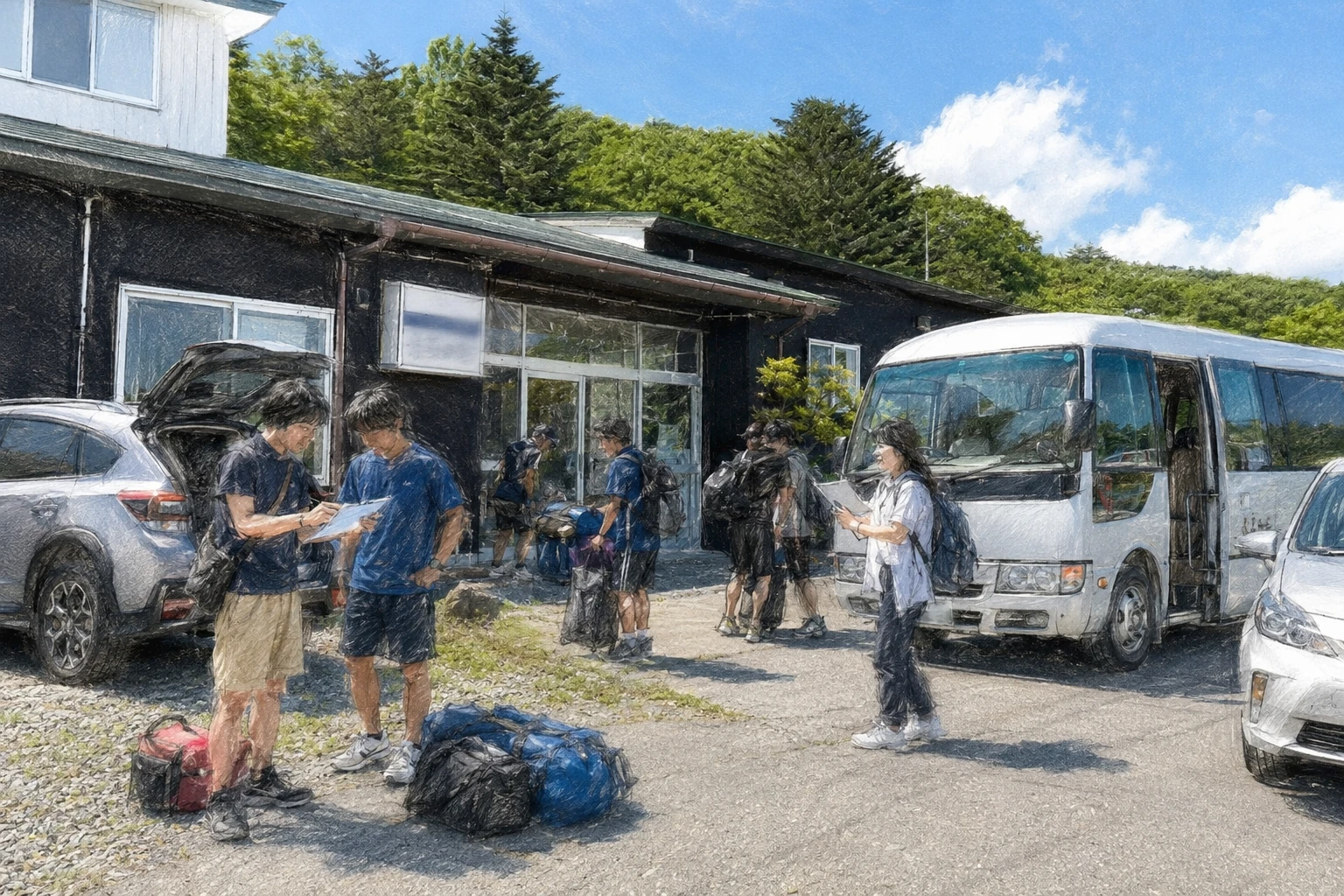
Vehicle departure
Luggage loading
Noise consideration for neighbors
SECTIONMeals and Sleep the Night Before
Confirm that meals will not become too late, everyone can finish bathing, and lights-out can be maintained. Even a facility close to the venue may not provide enough rest if the group’s evening routine does not run smoothly.
A Place to Check Equipment
Secure a place where uniforms, shoes, registration documents, first-aid supplies, and other essentials can be laid out and checked the night before. Also list items that will remain loaded in the vehicles.
When Results Can Change the Schedule
If tournament progress can change the return time or need for another night, confirm extension possibilities, group-size change deadlines, and cancellation conditions before booking.
Evaluate Venue Distance Under Early-Morning Conditions
Even when normal travel time is short, meeting time, parking-lot opening, winter road conditions, breakfast, and luggage loading can move departure much earlier. Work backward from tournament check-in and confirm whether the required departure and wake-up times are realistic.
SECTIONPlan Pre-Game and Post-Game Meals Separately
The team may need to leave before the accommodation’s normal breakfast time or return after the normal dinner time. Prepare alternatives for early departures, portable meals, food near the venue, and delay communication, and discuss those options with both the accommodation and the team.
| Tournament-Specific Check | What to Confirm |
|---|---|
| Day Before | Check-in, team representative meeting, equipment check |
| Morning of Competition | Wake-up, breakfast, loading, venue opening |
| During Competition | Meals, hydration, waiting location |
| After Competition | Return time changes based on results |
| Following Day | Back-to-back games, laundry, gear drying |
SECTIONPrepare for Tournaments Where Results Change the Plan
Advancing to a final or being eliminated can change meal counts, return times, or requests for an additional night. The facility may not be able to accept same-day changes, so confirm change deadlines and additional charges at booking and decide who on the team will make the final decision.
SECTIONJudge Venue Distance Using the Actual Competition Timeline
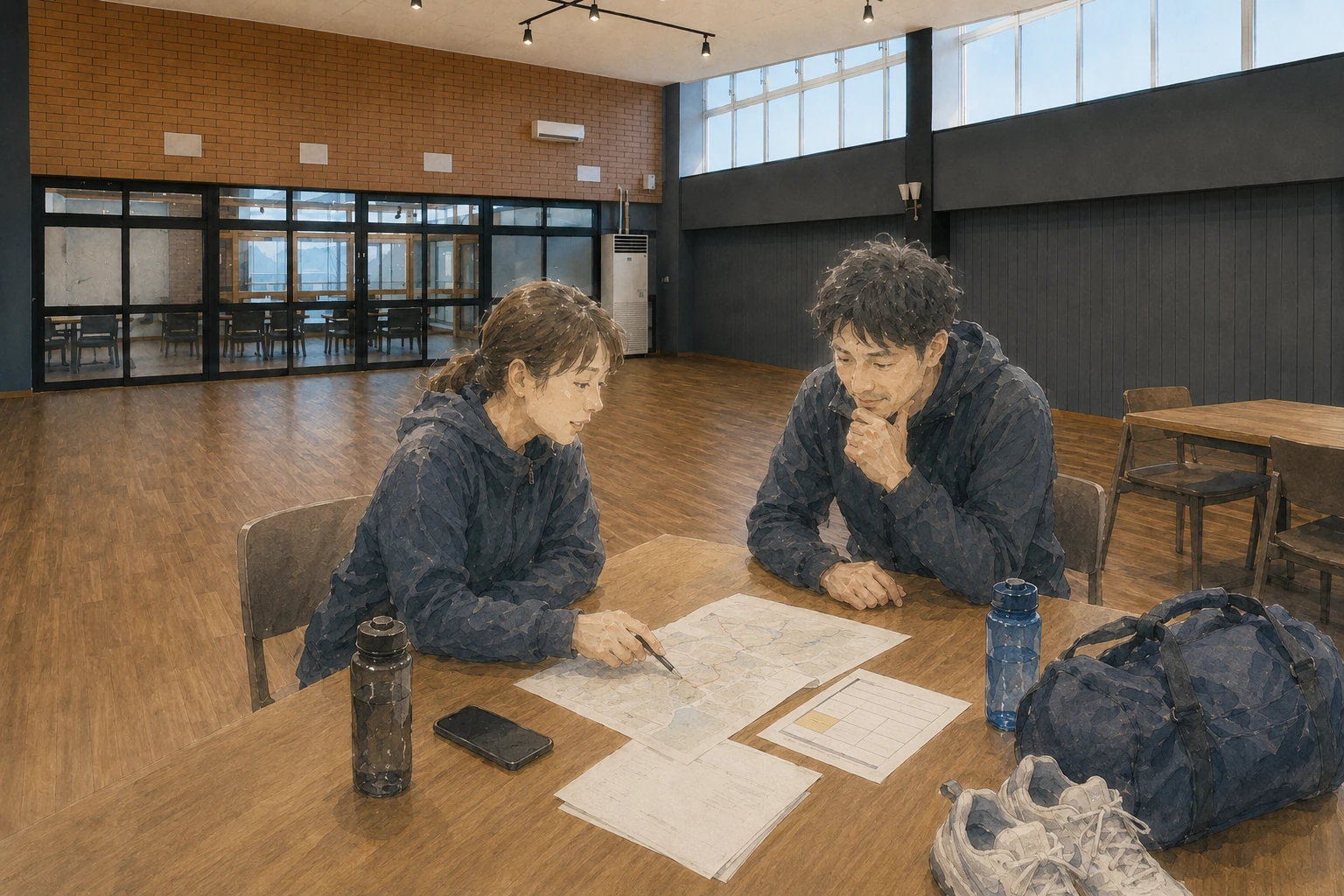
Calculate departure time using not only map distance but also game start, check-in, warm-up, parking, breakfast, and road conditions. Some roads or facilities may be limited early in the morning, so also confirm where the team can wait after arriving.
| Selection Area | What to Check for an Away Tournament |
|---|---|
| Venue Access | Check-in time, parking, drop-off, traffic buffer |
| Morning Operations | Breakfast, wake-up, loading, key return |
| After Competition | Bathing, meals, return trip, laundry during multi-night stays |
| Schedule Changes | Elimination, advancement, rain, timetable changes |
Alternatives When a Very Early Departure Cannot Be Supported
If the team must leave before the normal breakfast time, discuss options such as no breakfast, a portable meal, or receiving food the night before. Do not move meal times forward without agreement or use shared facilities outside scheduled hours without permission.
SECTIONExample: Comparing a Cheaper Distant Facility With a Closer One
A lower per-person rate can be offset by an early and long drive that increases wake-up demands, breakfast constraints, driver workload, fuel use, and athlete fatigue. Compare the price difference with the transportation burden for the whole group and evaluate how stable the morning can be before competition.
| Area | Near the Venue | Farther From the Venue |
|---|---|---|
| Wake-Up and Departure | Easier to allow more time | More likely to become very early |
| Driver Burden | Shorter | Increases with round trips |
| Breakfast | Easier to use normal hours | May require a time adjustment |
| Price | May be higher | May appear cheaper |
SECTIONFor Multi-Night Stays, Compare the Post-Game Daily Flow Too
When a tournament lasts multiple days, confirm meals, bathing, laundry, gear drying, and next-morning preparation after returning from the venue. If the first day ends late, waiting for shared daily-life facilities can reduce sleep even when the accommodation is close to the venue.
Update the Plan Using Official Tournament Information
Venues, check-in times, and match schedules can change. Do not rely only on images forwarded within the team; check the latest information from the tournament organizer. If a change affects the early departure or meal times shared with the accommodation, contact the facility promptly.
SECTIONWhen Using BASE NIIKAPPU as an Away-Tournament Base
Discuss the actual route to the venue, early-morning use inside the facility, vehicles, and room assignments in advance. It is easier to confirm conditions when you provide not only the tournament name but also meeting and check-in times.
FROM READING TO PLANNING