


QUICK BRIEF
What You Will Learn
- 01
State in one sentence what must be decided by the end
- 02
Proceed in the order of facts, interpretation and action
- 03
Keep only next-day action, owner and check time in the source of truth
CONTENTSTable of Contents
- 01Write one sentence describing what must be decided before the meeting ends
- 02Run the discussion through facts, interpretation and action
- 03Separate facilitation, notes and timekeeping
- 04Use a short response format instead of long comments from everyone
- 05Keep only three items in the next-day action table
- 06End on time to protect shared-space and sleep schedules
SECTIONWrite one sentence describing what must be decided before the meeting ends
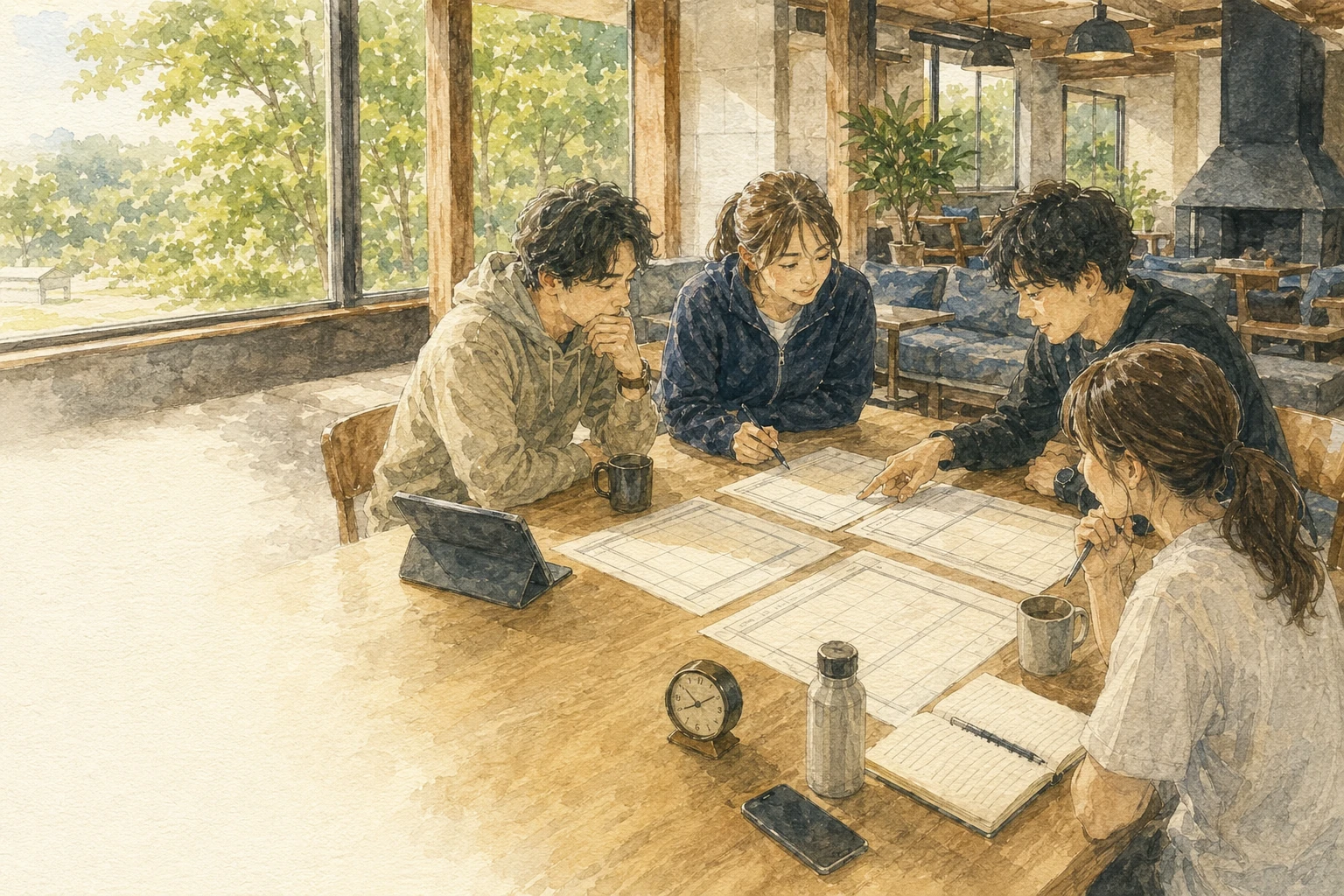
Before adding agenda items, write what must be decided by the end. For example: “Decide three actions to correct before tomorrow’s practice and assign a person responsible for each.” Keep the desired outcome to one sentence. Do not try to share impressions and make decisions at the same time.
SECTIONRun the discussion through facts, interpretation and action
| Category | What to discuss | Finish condition |
|---|---|---|
| Facts | What happened, time, counts and difficult situations | Reduce evaluative language and create a shared understanding |
| Interpretation | Why something worked, causes of problems and what to continue | Narrow the discussion to one or two issues |
| Action | What changes tomorrow, who owns it and when it will be checked | It is clear who will do what |
SECTIONSeparate facilitation, notes and timekeeping
If the coach or representative handles everything, they must speak while also controlling time and taking notes. Divide facilitation, recording and time checks. For a large group, have only representatives from each subgroup speak.
The facilitator moves off-topic points to a parking-lot list
The recorder keeps only decisions and owners
The timekeeper announces the remaining time for each section
Safety, health and harassment issues are separated from the normal agenda and handed to the responsible leader
SECTIONUse a short response format instead of long comments from everyone
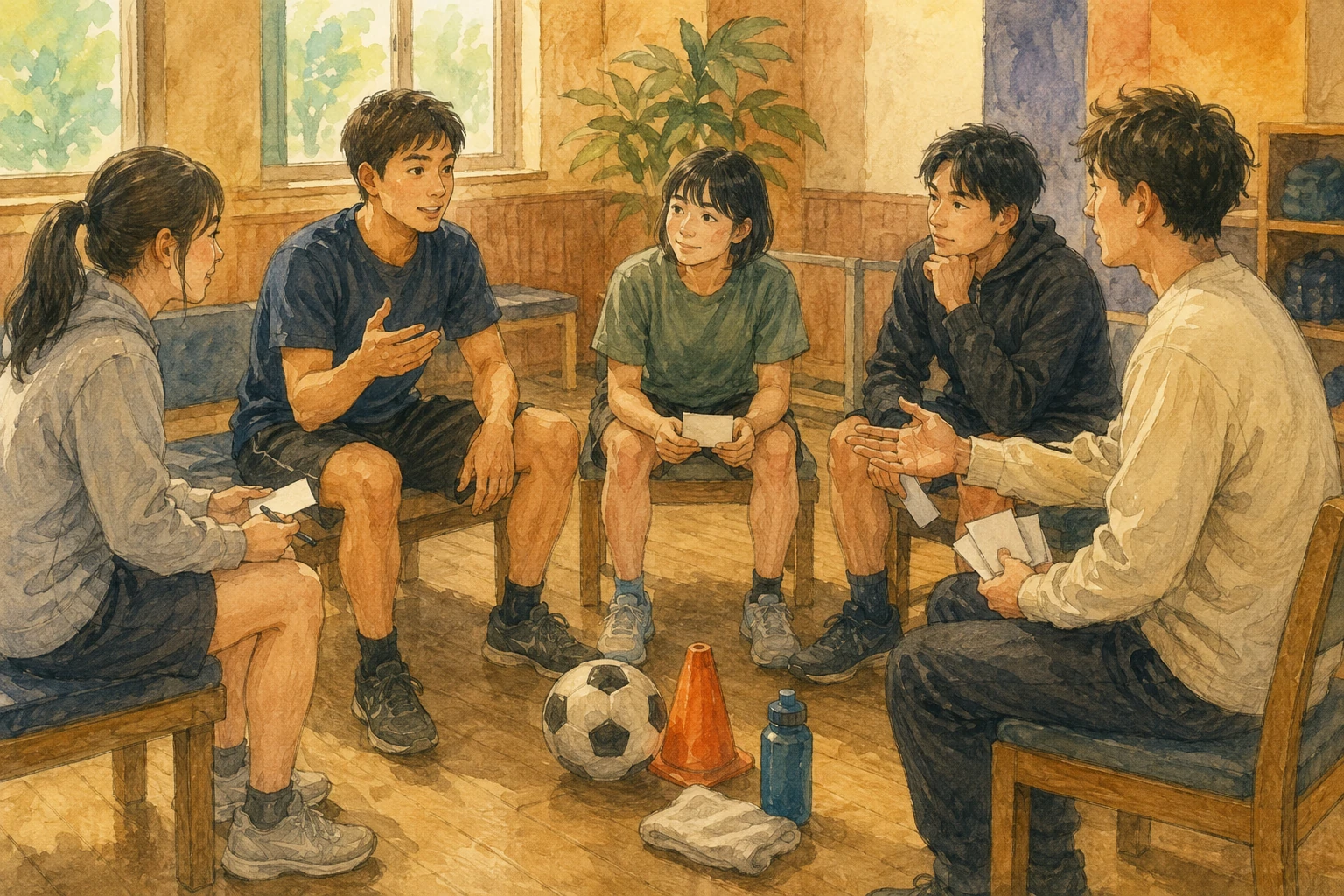
To reduce repetition, ask each person to choose one of three prompts: “what to continue,” “what to change,” or “where help is needed.” Do not force sensitive topics to be discussed publicly; provide a separate route for individual contact.
SECTIONKeep only three items in the next-day action table
| Item to keep | Example |
|---|---|
| Action | Complete assembly 10 minutes before start |
| Owner | Equipment lead and each room leader |
| Check time | Representative checks at the end of breakfast |
Instead of producing long minutes, keep next-day actions, owners and check times in one source of truth. Using the same storage location as the C35 participant briefing and C27 role table prevents conclusions from scattering across different chats or pieces of paper.
SECTIONEnd on time to protect shared-space and sleep schedules
Even when a meeting is necessary, it should not continue beyond facility rules for shared spaces, quiet hours or lights-out. Move unfinished issues to a leaders-only discussion instead of keeping the full group in the meeting.
FROM READING TO PLANNING
Undecided details are useful planning information.
Even before dates or group size are final, we can help organize the next steps from your current conditions.REFERENCES
Reference Information
Last checked: 2026.08.12