


QUICK BRIEF
What You Will Learn
- 01
Separate group visit/training consultation from room or hall rental applications.
- 02
Confirm headcount, time, fees, equipment and cooling/heating surcharges with the facility.
- 03
Manage BASE lodging reservations separately from Re・Cord Museum facility reservations.
CONTENTSTable of Contents
- 01Separate group visits and training from room or facility rental.
- 02Organize the group's purpose, size and required time.
- 03Ask about optional additions for a training visit.
- 04Choose among training rooms, the theater and the Town Hall auditorium.
- 05Confirm availability, make a provisional reservation, then apply.
- 06Check usage fees, time bands and cooling/heating surcharges.
- 07Conditions for private use of Re・Cord Hall.
- 08Proceed separately with BASE lodging consultation and facility reservation.
- 09Design same-day movement, supervision and the true finish time.
SECTIONSeparate group visits and training from room or facility rental.
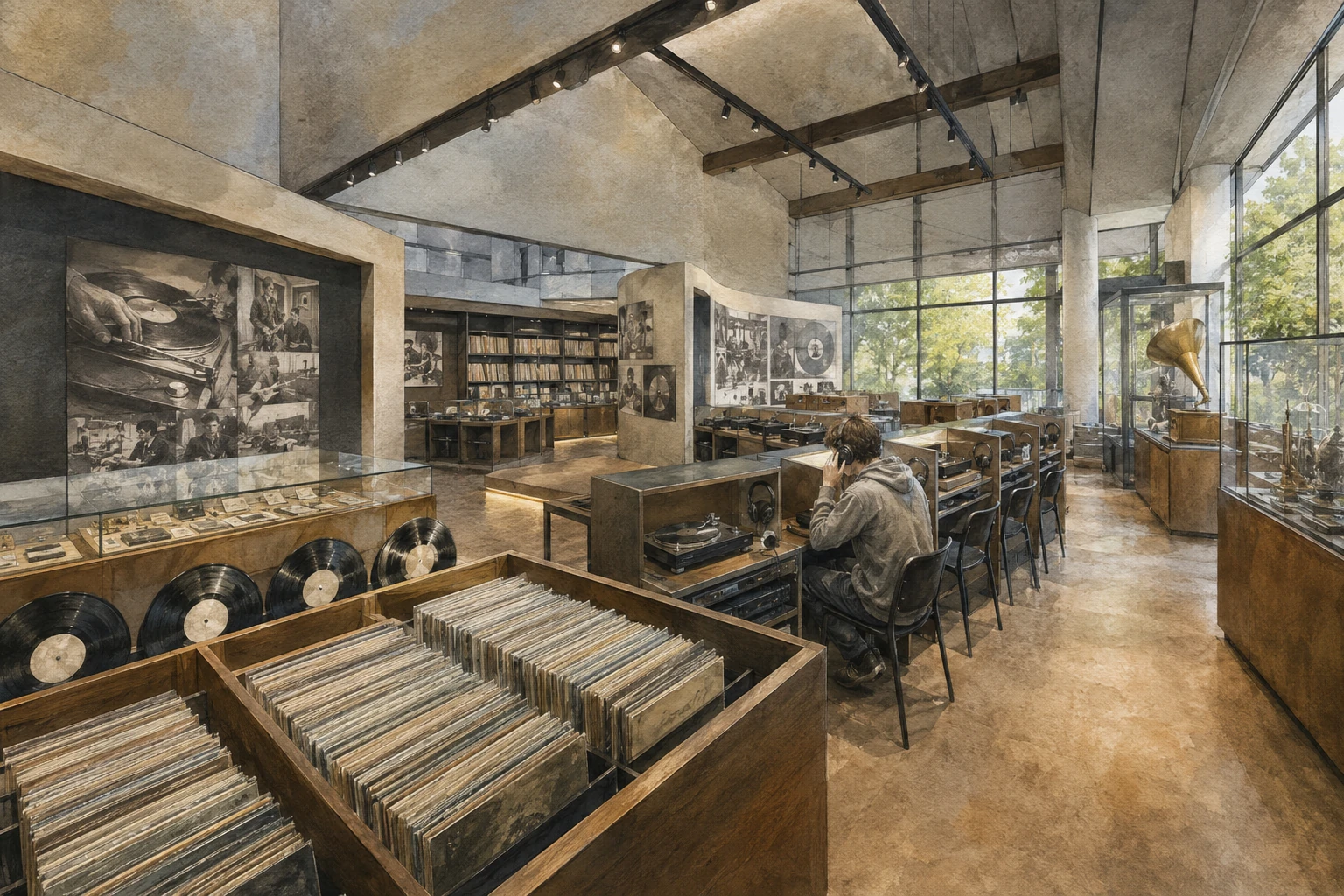
There are three broad ways for groups to use Re・Cord Museum: a regular exhibition visit, an educational or workplace training visit, and rental of spaces such as the training rooms, theater, Town Hall auditorium or Re・Cord Hall. Because the purposes differ, fees, preparation, applications and required time also differ.
| Use type | Main purpose | First things to confirm |
|---|---|---|
| Group visit | See exhibits, Yushun Tower and music culture | Number of people, date/time, areas to visit |
| Training visit | Learn with explanations, videos or other additions | Purpose, requested content, required time |
| Facility rental | Hold meetings, presentations, training or listening events | Availability, room, time band, equipment, application |
Do not assume that a group automatically receives an explanation or that renting a room automatically includes exhibition admission. Separate the elements you need and ask about each one.
In the first inquiry, do not say only that you want to use the facility as a group. Explain whether you need only a visit, a training program with explanations, or activity space as well. If combining several types of use, confirm the start/end times and responsible contact for each separately.
SECTIONOrganize the group's purpose, size and required time.
Before contacting the facility, organize the group name, purpose, preferred date, arrival/departure times, participant count, age range, chaperones, vehicles, and desired visit or training content. No unified public minimum/maximum group size or standard duration is published for group visits/training. Discuss them individually based on room capacity/layout and program content.
Group name and coordinator contact details
Purpose and intended outcomes
First and second preferred date/time
Participants, chaperones and wheelchair users or other relevant counts
Desired exhibits, video, audio experience or meeting
Number of buses and passenger vehicles
Desired preparation start and complete-clear-out times
Do not create an official duration yourself. Tell the facility what you want and obtain its answer. Include movement, restroom breaks, head counts and group photos in the itinerary.
For participant counts, provide not only the current expected number but also the minimum operating number, maximum expected number, and separate counts for chaperones, instructors and drivers. For participants needing wheelchair spaces or assistance, do not share more personal information than necessary; consult only what the facility needs to prepare.
If participant numbers may change, decide the confirmation deadline and the final number that will be reported to the facility.
Keep the inquiry in a single management sheet, separating questions, facility answers, confirmation dates, contacts and unresolved items. Record answers obtained by phone as well and compare them later with permits or estimates. Keeping the decision history traceable even if coordinators change helps prevent missed applications.
SECTIONAsk about optional additions for a training visit.
The town's official Q&A states that school, workplace and similar training groups can consult in advance about supplemental programs such as video materials. Content is individually adjusted; it is not necessarily a standard inclusion for every group or something that can always be added free of charge.
Defining the training purpose—for example, understanding record culture, experiencing audio equipment, learning about local culture and community development, or intergenerational exchange—helps the facility make proposals. Also explain the desired depth of the explanation and participants' existing knowledge.
If you want videos or explanations, state the learning goals, whether participants have prepared in advance, whether you want Q&A time, and whether a photographic record is needed. After confirming what the facility can offer, organize roles so it does not duplicate the group's own handouts or facilitation.
SECTIONChoose among training rooms, the theater and the Town Hall auditorium.
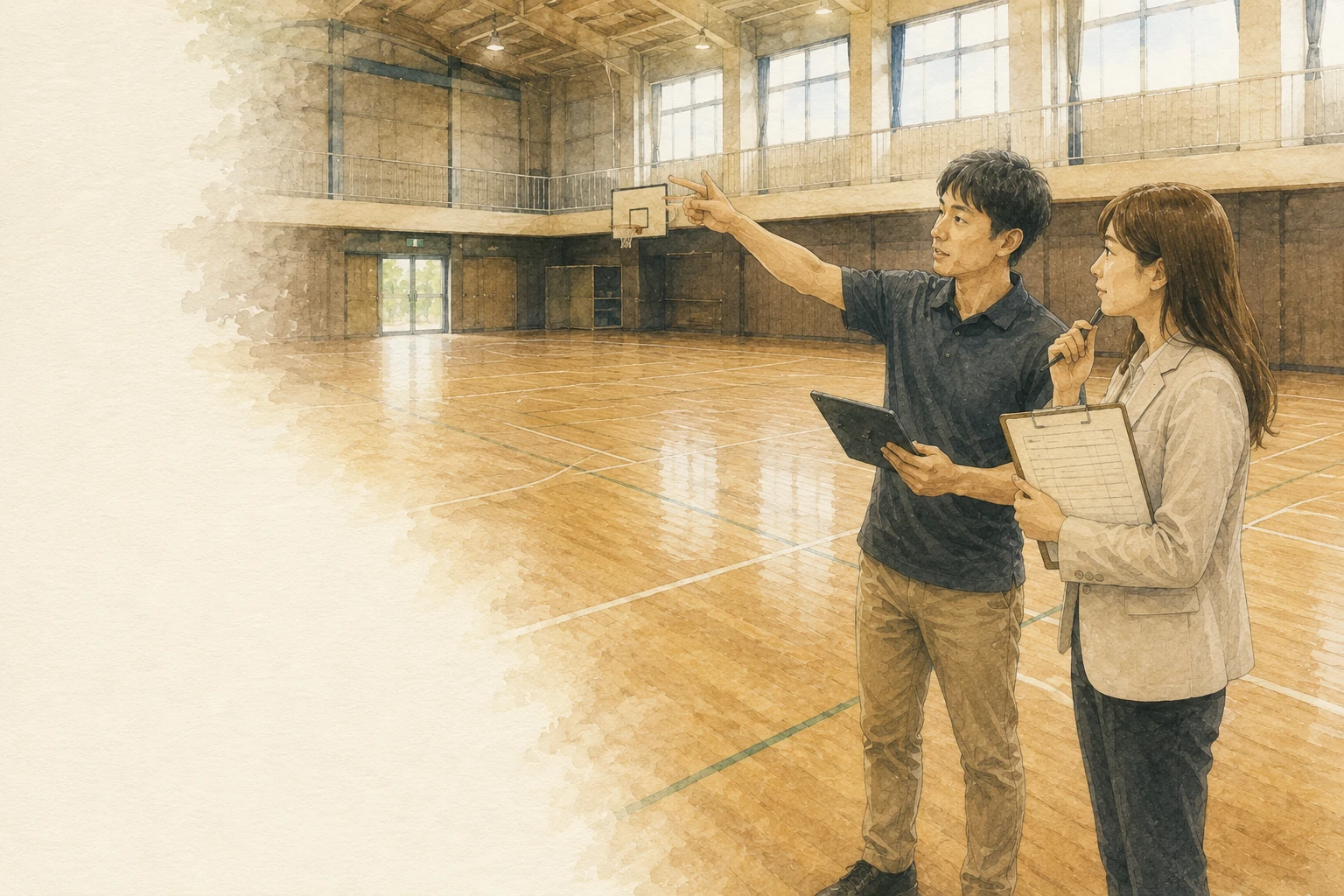
The Town Hall auditorium is listed at 507 seats plus 4 wheelchair spaces, and the theater at 90 seats plus 2 wheelchair spaces. Training rooms have layout-based capacity guides, but actual capacity changes with desks, chairs, equipment, aisles and fire-safety conditions.
| Facility | Suitable uses | Published scale guide |
|---|---|---|
| Training room | Meetings, lectures, group training | Confirm layout-based capacity when booking |
| Theater | Video viewing, lectures | 90 seats + 2 wheelchair spaces |
| Town Hall auditorium | Large lectures, presentations, stage use | 507 seats + 4 wheelchair spaces |
Do not choose a room by headcount alone. Explain audio, video, power, baggage, reception setup, waiting rooms, accessibility and desk layout before choosing.
Training rooms suit participatory workshops, the theater suits video or lectures, and the Town Hall auditorium suits large presentations, but equipment availability and who operates it must be confirmed separately. If bringing audio/video equipment, discuss connectors, power capacity, delivery route and rehearsal time as well.
SECTIONConfirm availability, make a provisional reservation, then apply.
- 01
Check availability by phone or in person
- 02
Provisionally reserve the preferred slot
- 03
Obtain the latest facility-use application form from the official page
- 04
Submit the application by the use date; fax submission is currently described as accepted
- 05
Receive the permit and estimate
- 06
After use, pay using the invoice/payment form sent to you
A provisional reservation alone does not necessarily finalize use. Check the application, permit and estimate, and contact the facility promptly if anything changes. Detailed cancellation/rescheduling rules cannot be confirmed from the public page alone, so always ask when booking.
After submitting the application, check the facility name, date, time band, fee and applicant name on the permit/estimate. If written information differs from what was discussed by phone, do not leave it unresolved until the day; ask the facility and update your records.
SECTIONCheck usage fees, time bands and cooling/heating surcharges.
Basic rental time bands are 9:00–13:00, 13:00–18:00 and 18:00–21:00. Preparation and cleanup are included in the reserved time. Fees vary by room and time band, and additional charges may apply for commercial use, equipment, management and cooling/heating.
| Facility | 9:00–13:00 | 13:00–18:00 | 18:00–21:00 |
|---|---|---|---|
| Town Hall auditorium | ¥4,800 | ¥7,300 | ¥9,500 |
| Training Room 1 | ¥1,400 | ¥2,200 | ¥2,900 |
| Training Rooms 2 & 3, each | ¥1,000 | ¥1,600 | ¥2,200 |
| Theater | ¥2,700 | ¥4,200 | ¥5,500 |
From July 1 to August 31 and November 1 to April 30, the current guidance adds 30% of the base fee for cooling/heating. The table shows base fees as currently checked; use the facility's estimate as the authoritative final amount.
When comparing costs, do not decide from the base fee alone. Judge the total estimate including cooling/heating, optional equipment, commercial-use category, preparation time and management fees. If using multiple rooms, also check whether their time bands overlap as intended.
SECTIONConditions for private use of Re・Cord Hall.
Re・Cord Hall is currently described as available for private use from 17:00 to 21:00 at ¥3,700 per hour, with extensions of 30 minutes at ¥1,200 and reservations generally required at least one week in advance. Users may bring records, but playback is operated by facility staff.
Discuss record condition, desired tracks, event flow, participant count, volume and end time in advance. Do not assume the same conditions as a standard rental room. Availability on the desired date and playback of every record you bring are not guaranteed.
Whether a brought record can be played may depend on its type and condition. If bringing a rare or fragile record, discuss packing, handover and handling in case of damage in advance rather than presenting it unexpectedly on the day.
SECTIONProceed separately with BASE lodging consultation and facility reservation.
BASE NIIKAPPU can be consulted about lodging, meals, the group's overall stay and an itinerary including transportation. Re・Cord Museum availability, provisional reservation, application and facility fees are procedures handled by Re・Cord Museum; an inquiry to BASE alone does not confirm them.
Use the existing article “8 Items to Organize Before Consulting a Training-Camp Facility” to organize headcount, dates, purpose, meals, transport and budget. The article “Before Using Niikappu Sports Facilities as a Group” also explains the principle of separating municipal-facility applications from lodging reservations. Do not mix the status of the two in one field; manage their coordinators and deadlines separately.
While both lodging and facility use remain provisional, do not present the plan to participants as final. Label states such as “lodging on hold,” “facility provisionally reserved,” and “application pending,” then integrate them into one itinerary only after final confirmation.
SECTIONDesign same-day movement, supervision and the true finish time.
On the day, design bus unloading, parking, head counts, reception, restroom breaks, visits, training, breaks and cleanup in chronological order. General parking is listed, but group-bus parking, boarding/alighting and waiting arrangements require individual confirmation. Do not assume large-vehicle accommodation.
Facility contact and group leader contact details
Arrival, reception, start, end and complete-clear-out times
Participant grouping and chaperone placement
Accessibility needs such as wheelchair, hearing or vision support
Change procedures for delays, absences or severe weather
Return-to-lodging time and meal/bathing schedule
The fees and procedures in this article were checked on August 11, 2026. Before publication, before applying and immediately before use, confirm availability, fees, application forms, cooling/heating surcharges, cancellation conditions and bus arrangements with the facility. Do not guess unanswered items; operate an itinerary that distinguishes confirmed, provisional and unconfirmed items.
Set the group's finish time to include not only the end of the program but also checking belongings, restroom use, head counts, bus boarding and departure. If the schedule is close to the lodging meal or bathing time, include buffer time for delays.
After use, have the relevant coordinators check borrowed equipment, brought items, keys, forgotten belongings and restoration of the room. Store invoices and implementation records separately from lodging expenses so they can be settled in the group accounts.
Distribute the final itinerary only after both facility use and lodging are confirmed. Do not finish with phone calls alone: compare permits, estimates and lodging conditions, and share changes in writing among coordinators.
FROM READING TO PLANNING
Undecided details are useful planning information.
Even before dates or group size are final, we can help organize the next steps from your current conditions.REFERENCES
Reference Information
- Re・Cord Museum Q&A↗
- Re・Cord Museum: Facilities Available for Use↗
- Re・Cord Museum: Training Rooms↗
- Re・Cord Museum: Theater↗
- Re・Cord Museum: Town Hall Auditorium↗
- Re・Cord Museum Facility-Use Fee PDF↗
- Re・Cord Museum: Admission Fees↗
- Re・Cord Hall↗
- Re・Cord Museum↗
Last checked: 2026.08.11