


QUICK BRIEF
What You Will Learn
- 01
Confirm bedding, bathing, nighttime and mobility needs—not age alone
- 02
Have adults inspect hazards and define safe areas after arrival
- 03
Do not assume child-oriented equipment is available; ask the facility in advance
CONTENTSTable of Contents
- 01Share age, daily-life needs and required assistance
- 02Do not judge bedding from photos alone
- 03Assign adults for bathing, washing and toilet support
- 04Adults should check hazards first after arrival
- 05Do not concentrate all nighttime responsibilities on one person
- 06Prepare information needed for emergency contact and medical care
SECTIONShare age, daily-life needs and required assistance
Children of the same age can still differ in bedding, meals, toileting, nighttime waking and mobility assistance. Do not provide names or medical history beyond what the facility needs; organize the age mix and specific accommodations required for the stay.
| Area | What the family decides | What to confirm with the facility |
|---|---|---|
| Bedding | Bed-sharing, separate bedding and fall prevention | Available bedding and placement conditions |
| Bathing | Who accompanies the child and order of use | Conditions for baths and washbasins |
| Nighttime | Who responds if the child wakes and how toilet trips are handled | Lighting, routes and nighttime contact |
| Meals | Foods the child can eat, timing and allergies | Conditions for brought-in food, meal provision and storage |
| Movement | Who handles carrying, stroller and luggage | Steps, entrance and vehicle conditions |
SECTIONDo not judge bedding from photos alone
Confirm the current type and number of beds, futons, sleeping bags or other bedding. Do not assume that children’s bedding, bed rails, cribs or bed-sharing rates are available. Discuss whether you can bring what you need.
SECTIONAssign adults for bathing, washing and toilet support
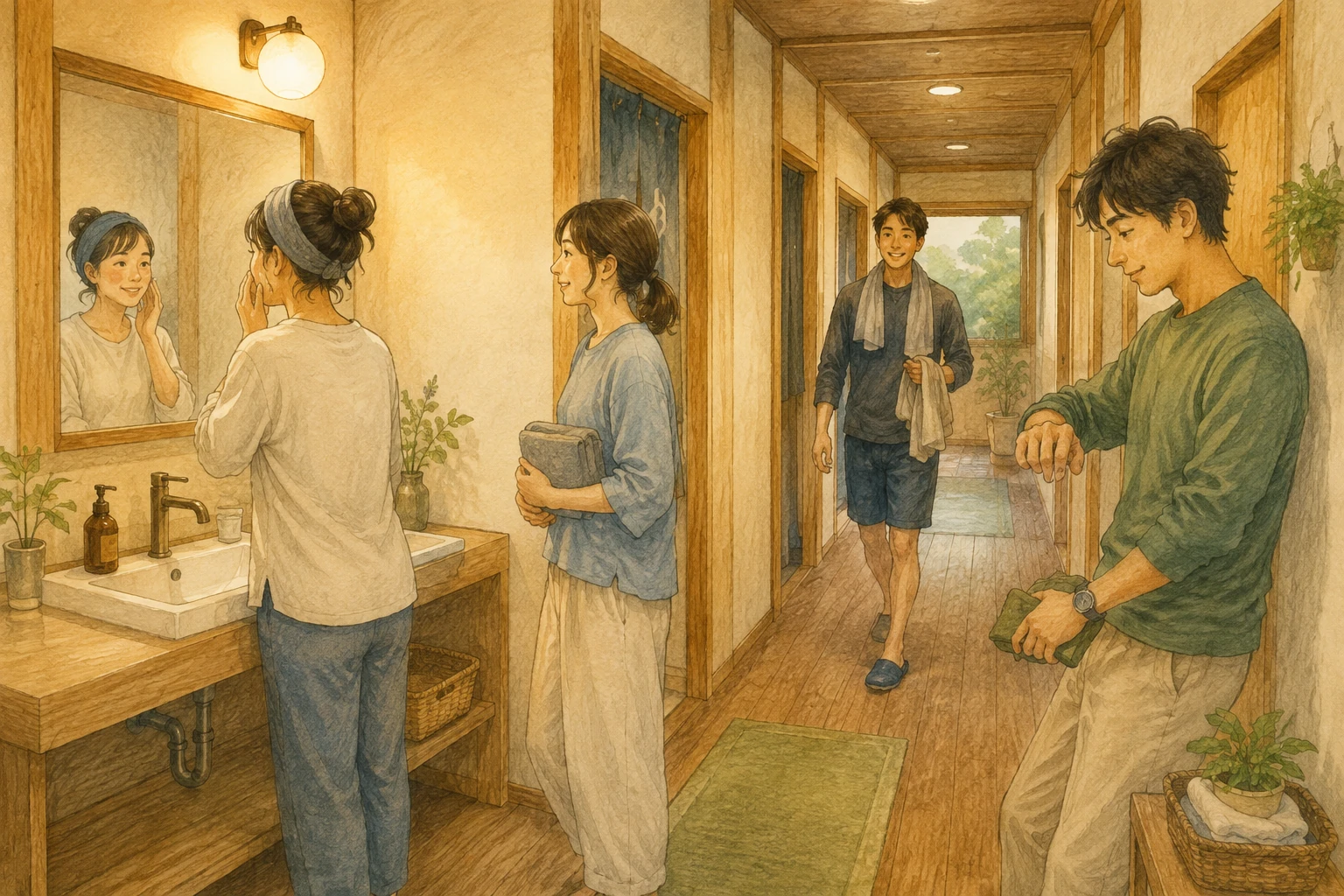
With shared facilities, assign accompanying adults by time period to reduce congestion and prevent children from being left unattended. Share household rules such as not photographing inside baths or toilets, not allowing children into hallways alone, and not running on slippery surfaces.
SECTIONAdults should check hazards first after arrival
Stairs, level changes, windows, doors and areas around heating equipment
Cooking tools, detergents, medicine, tools and power cords
Outdoor exits, parking areas and routes toward roads
Other guests’ luggage and sports equipment
The actual facility layout may differ from expectations. Adults should check immediately after arrival and show children the areas they can use safely rather than only listing prohibitions.
SECTIONDo not concentrate all nighttime responsibilities on one person
When several children are present, assigning bathing, bedtime, nighttime waking and next-morning preparation to the same guardian can make the plan fail. Keep each family responsible for its own child while sharing supervision of common areas and luggage handling where appropriate.
SECTIONPrepare information needed for emergency contact and medical care
Carry guardian contact details, what is needed to verify health-insurance eligibility, regular medication, allergy information and instructions from the child’s usual medical provider. For a high-urgency emergency, prioritize calling 119; for non-emergency medical visits, follow the A18 procedure.
FROM READING TO PLANNING
Undecided details are useful planning information.
Even before dates or group size are final, we can help organize the next steps from your current conditions.REFERENCES
Reference Information
Last checked: 2026.08.12