


QUICK BRIEF
What You Will Learn
- 01
Use WBGT to decide whether activity can proceed
- 02
Use heat acclimatization and health checks
- 03
Combine hydration/salt replenishment with body cooling
CONTENTSTable of Contents
- 01Measure the actual heat environment even at a Hokkaido summer camp
- 02WBGT is different from air temperature
- 03Begin heat acclimatization before the camp starts
- 04Check health before, during and after activity
- 05Combine water and salt replenishment with body cooling
- 06Rebuild the training time and venue if needed
- 07If heat illness is suspected
- 08When discussing a summer camp with BASE NIIKAPPU
SECTIONMeasure the actual heat environment even at a Hokkaido summer camp
Even where normal summer temperatures are comparatively low, solar radiation, humidity, wind and the venue environment can change the load on the body. Check WBGT under conditions close to the actual activity area, including unconditioned gyms and poorly ventilated spaces.
SECTIONWBGT is different from air temperature
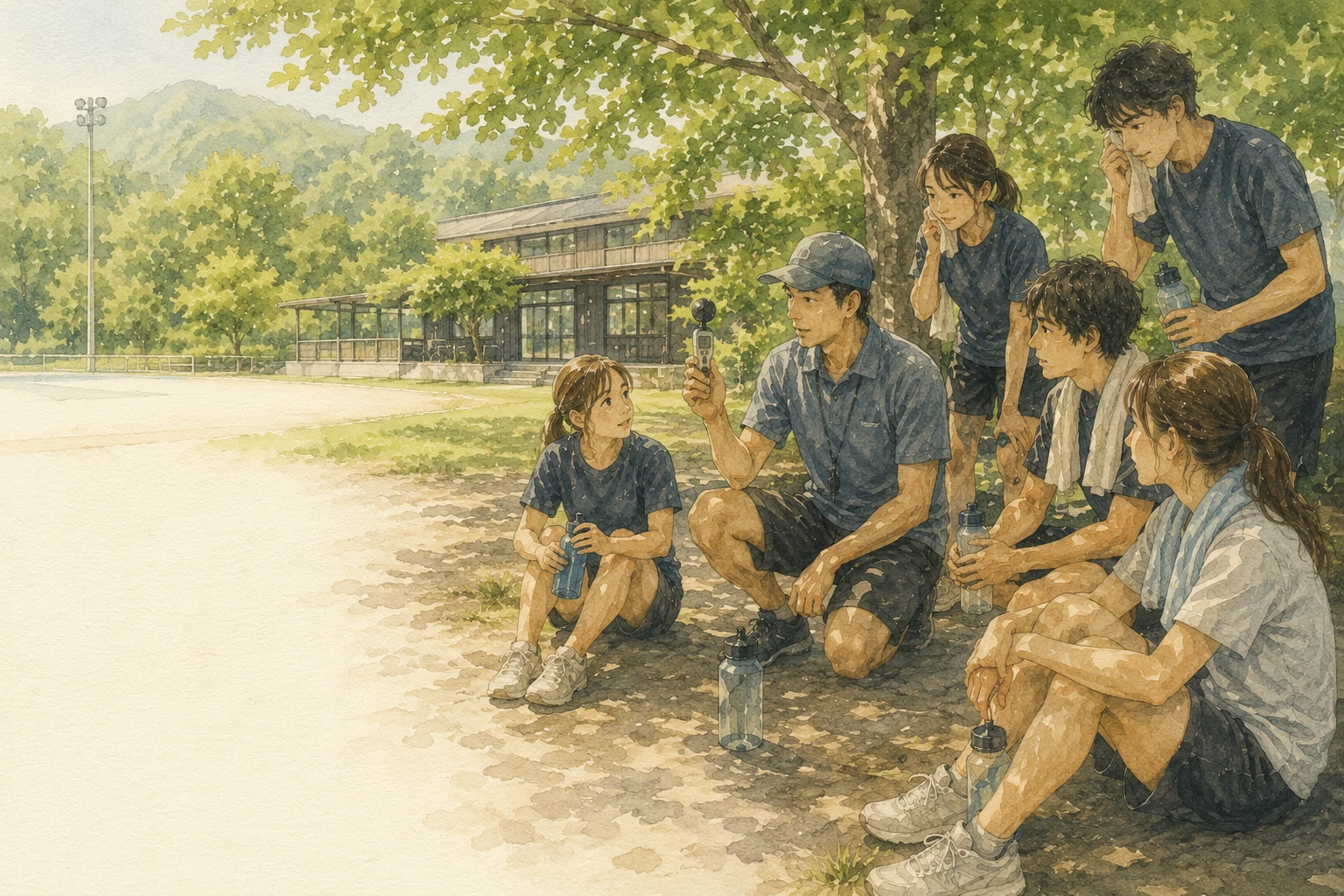
WBGT reflects not only air temperature but also humidity and radiant heat from the surrounding environment. Use the Ministry of the Environment heat-illness prevention site and/or on-site measuring equipment, checking both forecast and measured values.
| WBGT | Exercise guideline | Basic camp response |
|---|---|---|
| 31 or higher | Exercise generally stopped | Stop except in special cases; children in particular should stop |
| 28 to under 31 | Severe caution; stop vigorous exercise | Avoid endurance running and similar high-load exercise; rest and replenish every 10–20 minutes |
| 25 to under 28 | Caution; take active rests | Adjust load; for vigorous exercise, take a rest roughly every 30 minutes |
| 21 to under 25 | Attention; actively replenish fluids | Watch for warning signs and replenish during activity |
| Under 21 | Generally safe | Risk is not zero, so replenish as appropriate |
SECTIONBegin heat acclimatization before the camp starts
The Sports Agency notes that heat illness is more likely when the body is not yet accustomed to heat and calls for gradual, manageable acclimatization before high heat stress. Do not begin the camp at maximum load; adjust both pre-camp training and the first day's intensity.
Check recent activity levels and how accustomed participants are to heat
Reduce intensity immediately after travel and on the first day
Do not give the same load to participants returning from rest or illness
Judge conditions while accounting for uniforms and protective equipment
SECTIONCheck health before, during and after activity
Insufficient sleep, low appetite, fever or diarrhea before activity can increase risk in hot conditions. Check participants not only during training but afterward as well, and have a structure in which the responsible person can stop activity or arrange medical evaluation when needed.
| Timing | What to check |
|---|---|
| Before activity | Sleep, meals, hydration, condition, medication and fatigue from the previous day |
| During activity | Movement, response, sweating, headache, nausea and unsteadiness |
| After activity | Whether symptoms persist, heat sensation, replenishment, meals and readiness for the next day's activity |
SECTIONCombine water and salt replenishment with body cooling
The Sports Agency's 2026 notice emphasizes health checks before, during and after activity, water and salt replenishment, and a variety of effective body-cooling measures. Do not use drinking alone as a reason to continue pushing activity; use a cool location, cooling supplies and clothing adjustments to limit heat buildup.
Place drinks so participants can replenish without having to go far
Confirm shade, air conditioning or ventilation at the rest location
Prepare ways to cool areas such as the neck, armpits and legs
Assign someone to restock drinks and cooling supplies
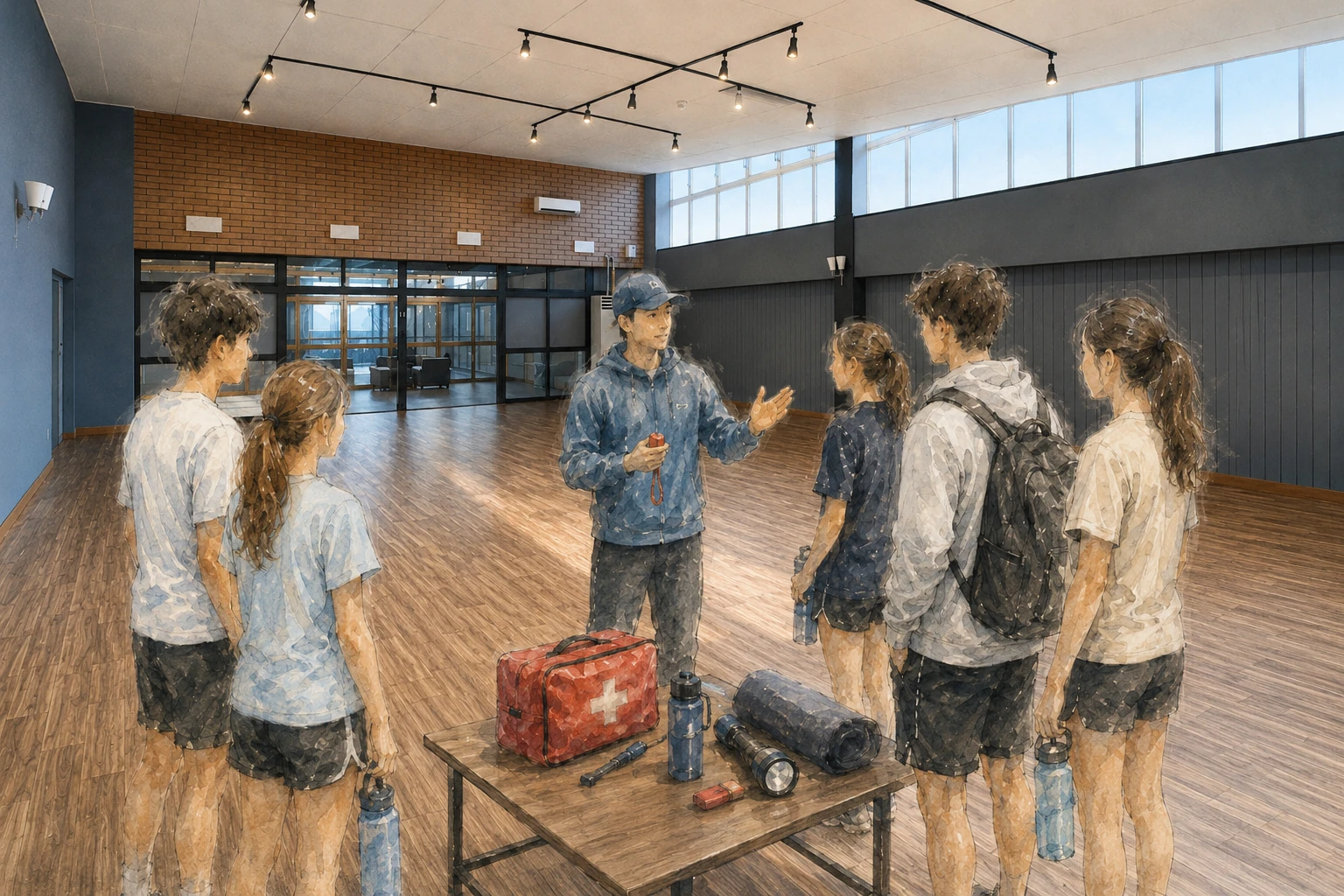
Do not send a participant back into activity if they cannot replenish or have symptoms
SECTIONRebuild the training time and venue if needed
Prepare options not only to avoid the hottest hours but also to reduce exercise load, increase rest, move to an indoor or covered area, or switch to technical review or a meeting. Do not leave the stop threshold to one person on the day; share it beforehand among the coach, organizer and venue contact.
- 01
Check forecast WBGT and alerts by the previous day
- 02
On the day, check WBGT under conditions close to the activity area
- 03
Change load, duration or location before the limit is exceeded
- 04
After a pause, reassess participant condition even if the number has fallen
- 05
Record the decision to proceed, modify or stop activity
SECTIONIf heat illness is suspected
Stop activity, move the person to a cool place, loosen clothing and begin body cooling. If the person responds abnormally, is unconscious or cannot drink on their own, call 119 immediately and continue cooling until emergency services arrive. Even if consciousness is normal and the person can drink, arrange transport to a medical institution if symptoms do not improve after first response.
SECTIONWhen discussing a summer camp with BASE NIIKAPPU
Share the sport, activity times, preferred venue, headcount, age range and heat-related backup activities. Availability of training venues or indoor environments is adjusted after candidate dates and facility conditions are checked.
FROM READING TO PLANNING
Undecided details are useful planning information.
Even before dates or group size are final, we can help organize the next steps from your current conditions.REFERENCES
Reference Information
Last checked: 2026.08.12