


QUICK BRIEF
What You Will Learn
- 01
Confirm practice, travel, bathing, sleep and meal service on the same timetable
- 02
Use snacks only to bridge gaps before regular meals
- 03
Confirm individualized nutrition amounts and therapeutic diets with qualified professionals
CONTENTSTable of Contents
- 01First put practice, travel and meal-service times on one timeline
- 02Center the plan on regular meals with staple foods, main dishes and sides
- 03Use snacks to bridge a gap, not to replace meals
- 04In hot weather, manage meals separately from hydration and rest
- 05Ask the facility about both service conditions and outside-food conditions
SECTIONFirst put practice, travel and meal-service times on one timeline
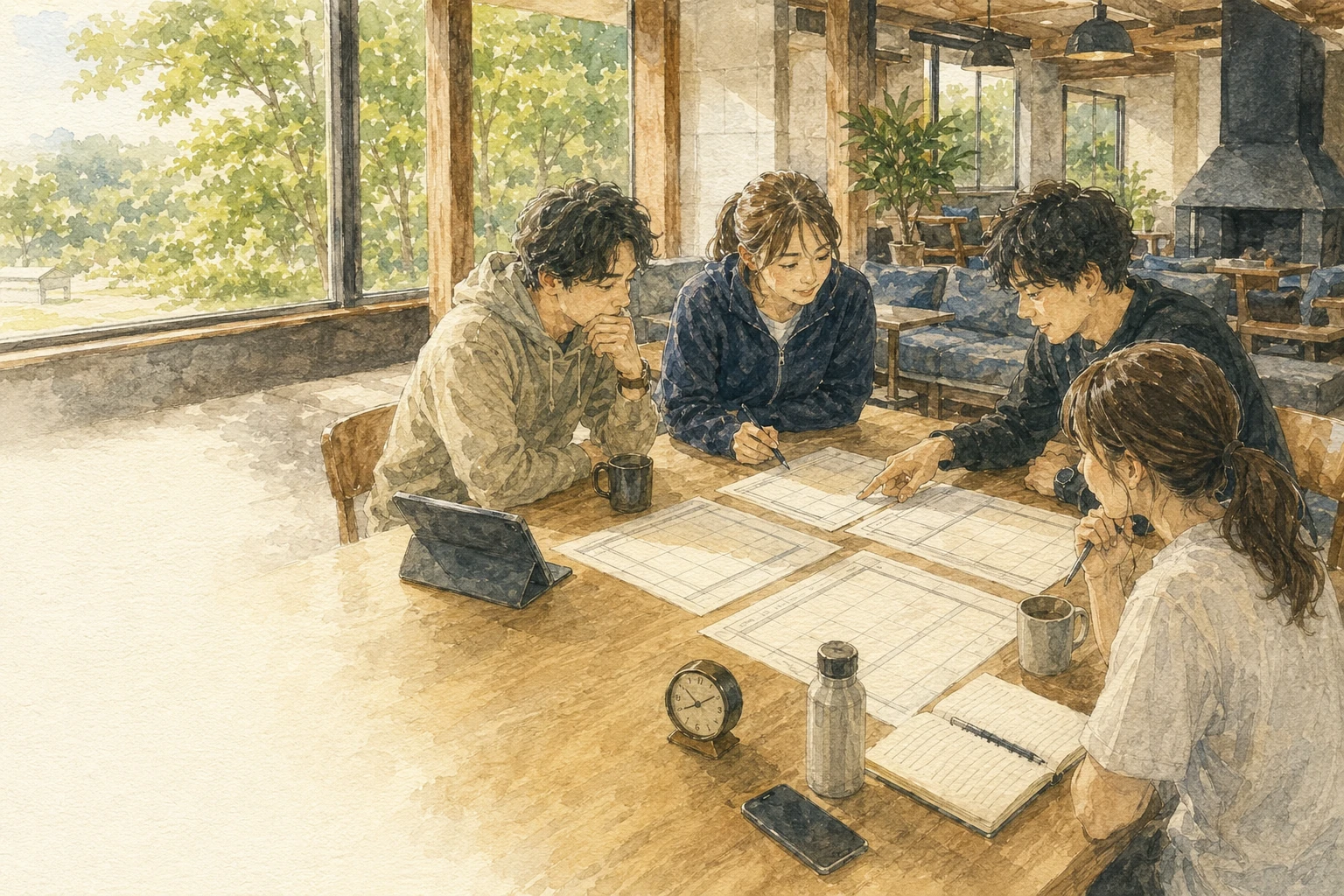
The Japan Institute of Sports Sciences emphasizes meeting athletes’ energy and nutrient needs primarily through everyday meals. During a training stay, do not fill the schedule with practice first; place meal service, travel from the venue, bathing and lights-out on the same timetable.
| Time to check | What to decide | If the schedule slips |
|---|---|---|
| Wake-up / morning practice | Time available for breakfast and when travel begins | Adjust practice start instead of cutting breakfast short |
| End of morning practice | Gap until lunch and travel time | Prepare a portable snack only when needed |
| End of afternoon practice | Dinner service time and bathing order | Decide how food will be received and who contacts the provider if practice ends late |
| Before bedtime | Time for digestion, cleanup and medication | Review the overall schedule rather than making late-night meals routine |
SECTIONCenter the plan on regular meals with staple foods, main dishes and sides
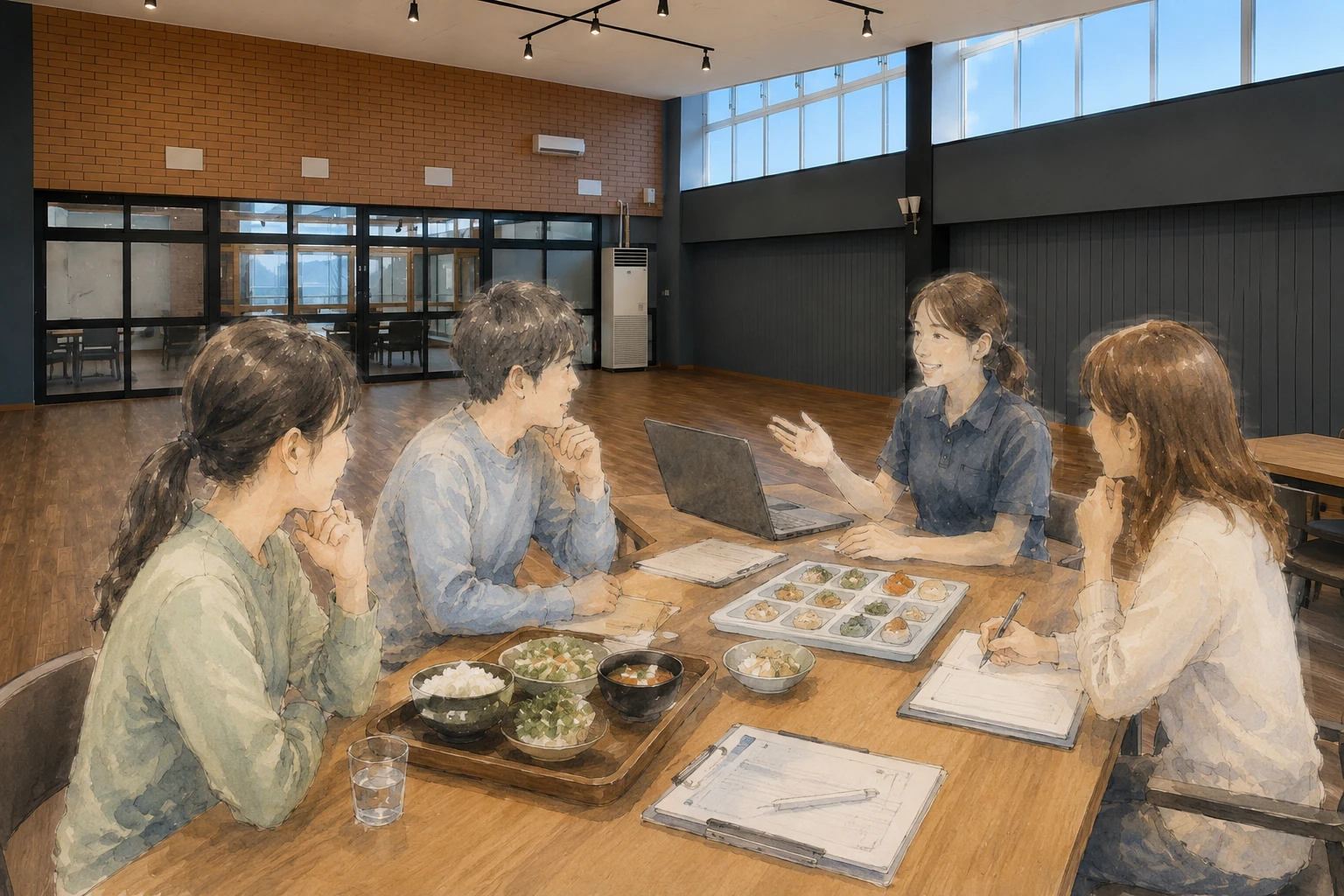
The basic approach is to combine staple foods, main dishes, side dishes, dairy products, fruit and similar everyday foods while preventing shortfalls according to training load. Do not try to manage the whole training stay with one specific food or supplement. Confirm what meals are provided, serving amounts, foods participants cannot eat and the time available for eating.
SECTIONUse snacks to bridge a gap, not to replace meals
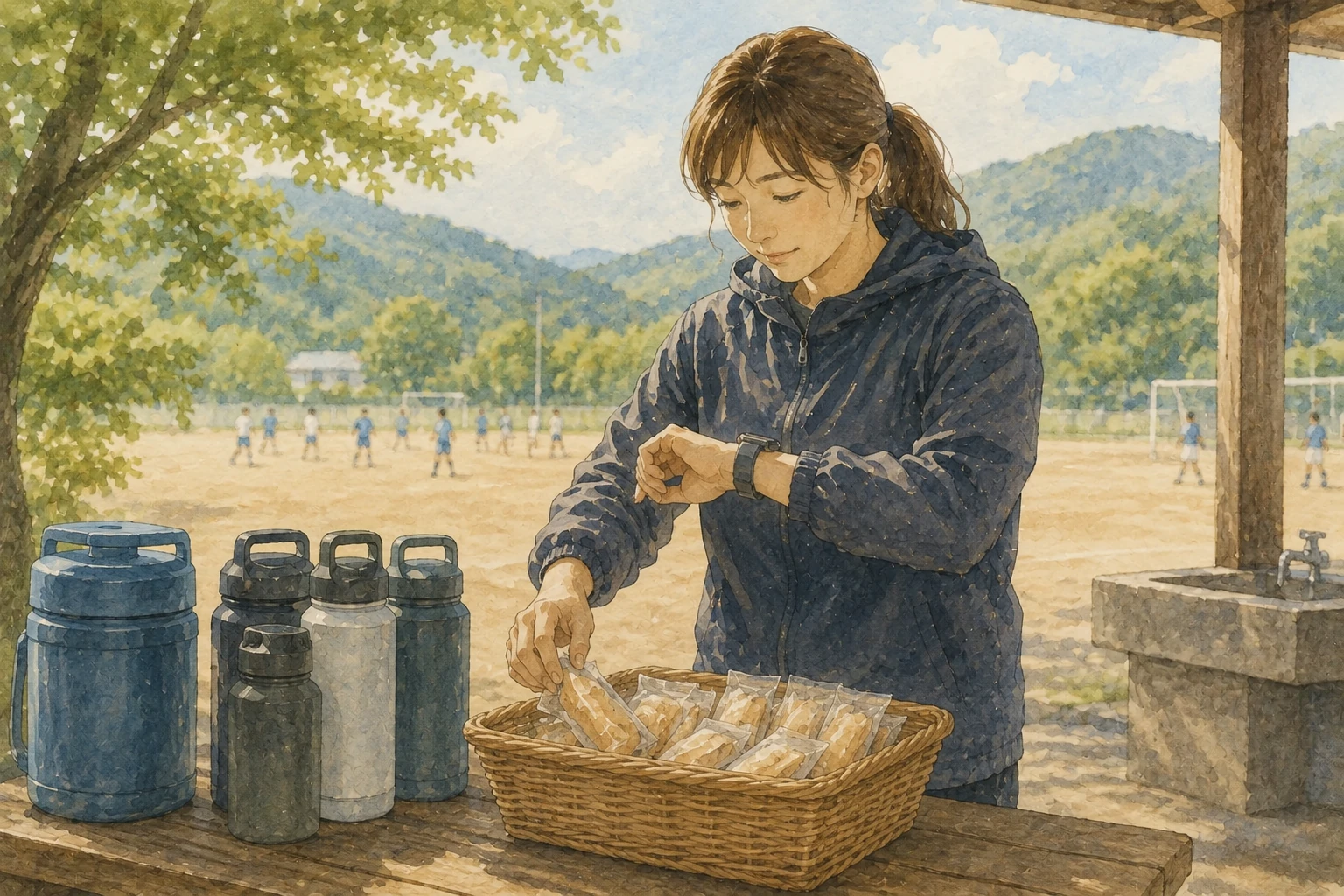
Plan a snack as a bridge when there is a long gap until the next normal meal or when a meal cannot be eaten soon after exercise. Check portability, storage temperature, digestibility and food allergies, and decide who distributes items and how remaining quantities are tracked.
Decide which time periods and participants actually need snacks
Confirm whether room-temperature storage is safe or refrigeration is required
Check ingredient labels even on individually wrapped items and do not distribute unidentified food
Decide where leftovers and packaging waste will be returned
Do not test a new supplement for the first time during the actual training stay
SECTIONIn hot weather, manage meals separately from hydration and rest
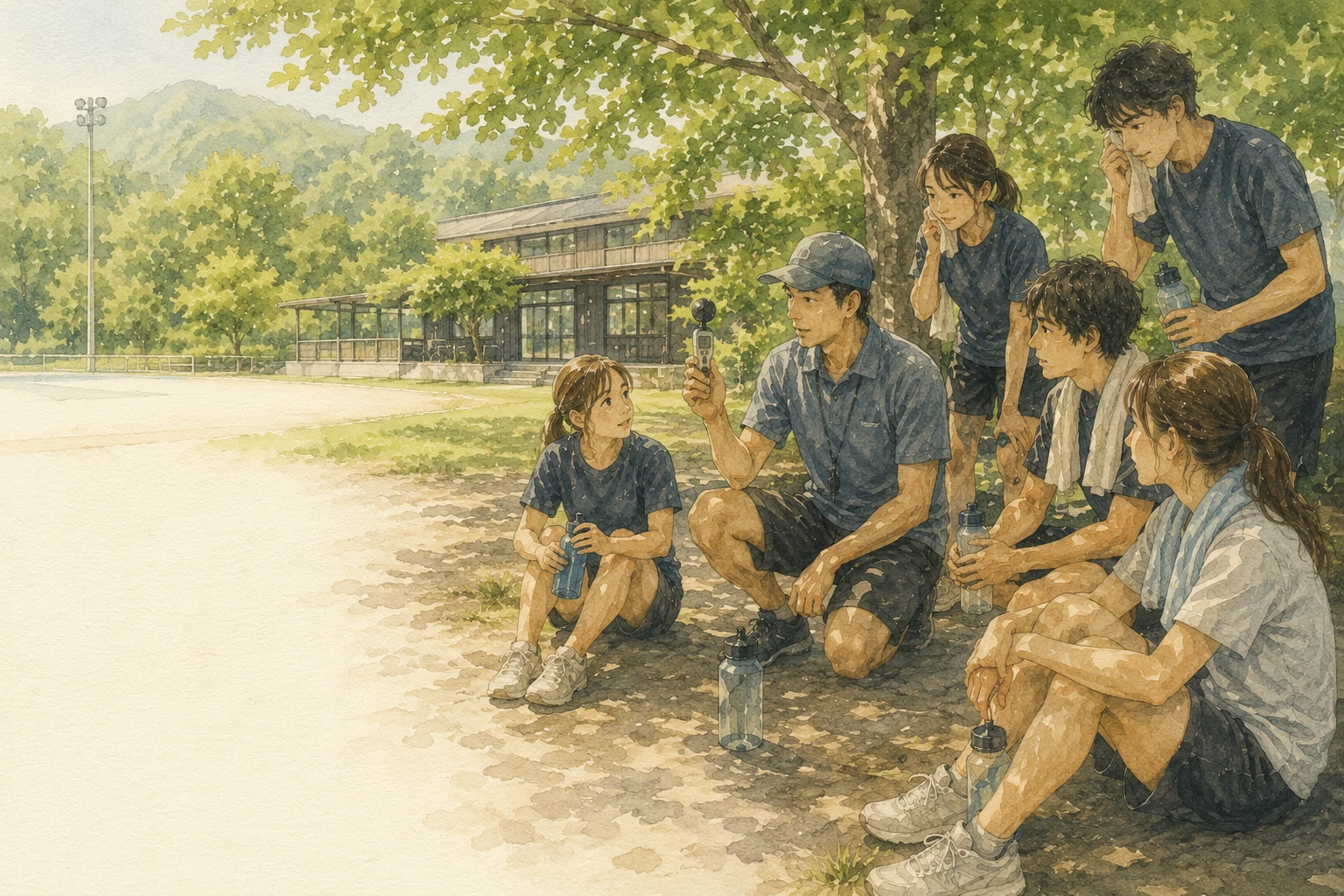
Simply providing snacks does not complete heat-safety planning. Manage WBGT, rest, fluids, salt intake, body cooling and decisions to stop practice through the C29 procedure, with separate responsibilities for meal staff and safety staff. If someone has loss of appetite or feels unwell, do not force intake; the responsible adult should decide whether activity can continue.
SECTIONAsk the facility about both service conditions and outside-food conditions
Whether BASE NIIKAPPU can accommodate meal arrangements, deliveries, brought-in food, refrigeration, eating locations and waste handling depends on the conditions of each stay and must be confirmed. Providing the number of people, ages, arrival time, number of meals, allergies and expected return time from the training venue together makes timetable conflicts easier to identify.
- 01
Create a tentative schedule for practice, travel, bathing and sleep
- 02
Confirm meal-service conditions and the deadline for final headcount
- 03
Place snack options only in time gaps before regular meals
- 04
Add allergy, storage, distribution and waste collection responsibilities to the role table
- 05
Reconfirm the latest headcount and times before departure
FROM READING TO PLANNING
Undecided details are useful planning information.
Even before dates or group size are final, we can help organize the next steps from your current conditions.REFERENCES
Reference Information
- HPSC Sports Nutrition↗
- HPSC Basics of an Athlete’s Diet↗
- HPSC Types of Sports Foods and Supplements↗
- HPSC Before Using Supplements↗
- BASE NIIKAPPU Team & Group Stays↗
Last checked: 2026.08.12